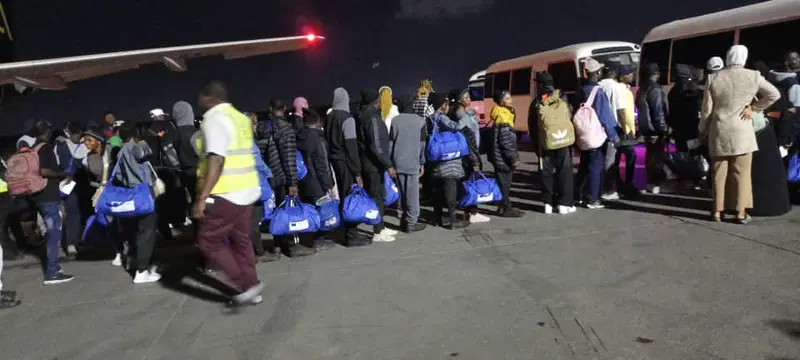
A 23-year-old Nigerian returnee, Endurance Daniel, has shared a heartbreaking account of her migration ordeal through the Sahara Desert, revealing the extreme conditions she and dozens of others endured in their desperate journey to Libya.
Speaking after her return to Nigeria with the support of the International Organisation for Migration (IOM), Daniel recounted how she travelled in a cramped vehicle alongside 52 other migrants.
According to her, the journey quickly turned tragic, as at least seven people lost their lives due to dehydration, hunger, and the harsh desert environment.
“We spent over a month in the desert without water. At some point, we had no choice but to drink our urine to survive,” she said. “Eventually, even that stopped. Some people began passing blood instead.”
She described the emotional trauma of watching fellow migrants die and their bodies left behind in the desert, as there was no means of escape or proper burial.
Daniel revealed that she was only 17 when she was persuaded to leave Nigeria, following promises of better opportunities in Libya.
A family acquaintance had assured her mother that she would secure a job, earn money quickly, and eventually build a better life.
However, upon arrival in Libya in 2019, reality proved drastically different.
“My sponsor told me the only options available for women were domestic work or prostitution,” she said. “There were no other opportunities.”
Related News:
182 Nigerians Repatriated from Libya Through IOM–FG Partnership
Ogun Fathers Under Investigation for Trafficking Daughters to Libya
Libya Journey: Cobbler Arrested Over Alleged Motorcycle Theft in Edo
Police Probe Alleged Trafficking of Minor from Lagos to Ghana
Edo Police Raise Alarm Over Rising Cases of Sexual and Gender-Based Violence
Attempts to return home were blocked, as traffickers insisted she repay the cost of her journey before gaining her freedom.
She also alleged that migrants were denied access to communication with their families and were constantly threatened with being sold into forced prostitution if they disobeyed instructions.
Daniel further disclosed that many migrants were manipulated through false promises, intimidation, and exploitation, leaving them trapped in vulnerable and inhumane conditions.
After surviving the desert, she and others were taken to overcrowded camps where food was scarce and poorly prepared.
“We were given plain spaghetti without salt. We ate it because we had no choice,” she said.
She added that migrants were often hidden in vehicles to evade security checks, with the constant risk of arrest or imprisonment if discovered.
Now safely back in Nigeria, Daniel expressed gratitude for her return and issued a strong warning to young Nigerians considering irregular migration.
“People should verify opportunities before leaving the country. What I experienced was nothing like what I was promised,” she cautioned.
Her story adds to the growing number of testimonies highlighting the dangers of human trafficking and irregular migration routes across North Africa, reinforcing calls for increased awareness and protection for vulnerable individuals.
About the Author