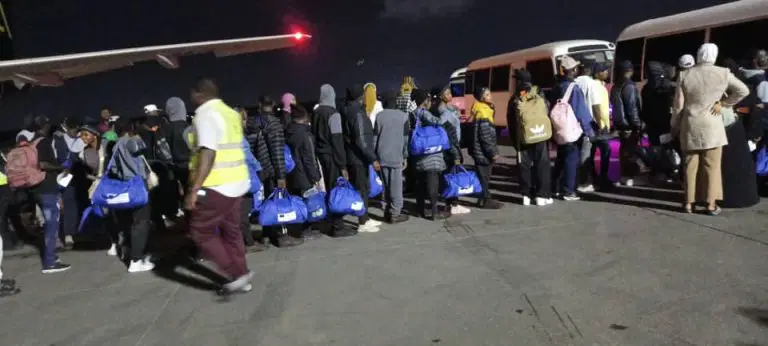
No fewer than 182 Nigerian migrants have been safely repatriated from Libya through a coordinated effort between the International Organization for Migration (IOM) and the Federal Government of Nigeria.
The returnees arrived at the Murtala Muhammed International Airport, Lagos, on Tuesday evening at approximately 8:24 p.m. aboard a Buraq chartered flight.
Among those returned were 153 adults comprising 108 females and 45 males—as well as two unaccompanied children.
According to officials, about 50 of the migrants were evacuated directly from detention centres, while others were rescued from various locations around Benghazi, Libya.
The repatriation was carried out under the IOM’s Assisted Voluntary Return and Reintegration (AVRR) programme, funded by the European Union in collaboration with the Nigerian government and key stakeholders.
Speaking on the development, the Head of IOM’s Lagos Sub-Office, Ali Ibrahim, noted that the returnees had endured difficult migration journeys marked by hardship, uncertainty, and, in some cases, exploitation.
Related News:
Ogun Fathers Under Investigation for Trafficking Daughters to Libya
Libya Journey: Cobbler Arrested Over Alleged Motorcycle Theft in Edo
Dabiri-Erewa condemn the treatment meted out to Super Eagles team by Libya
Police Probe Alleged Trafficking of Minor from Lagos to Ghana
He emphasized that while their return marks a significant relief, it is only the beginning of a recovery process. Upon arrival, the migrants received immediate support, including health screening, counseling, and other reception services.
Ibrahim further explained that eligible returnees would benefit from reintegration assistance aimed at helping them rebuild their lives.
This support includes skills acquisition programmes, small business funding, and psychosocial care.
He revealed that over the past decade, more than 65,700 Nigerians have been successfully returned through the initiative, with over 52,200 beneficiaries receiving reintegration support.
The programme continues to serve as a critical pathway for restoring dignity and providing sustainable opportunities for Nigerians affected by irregular migration.
About the Author