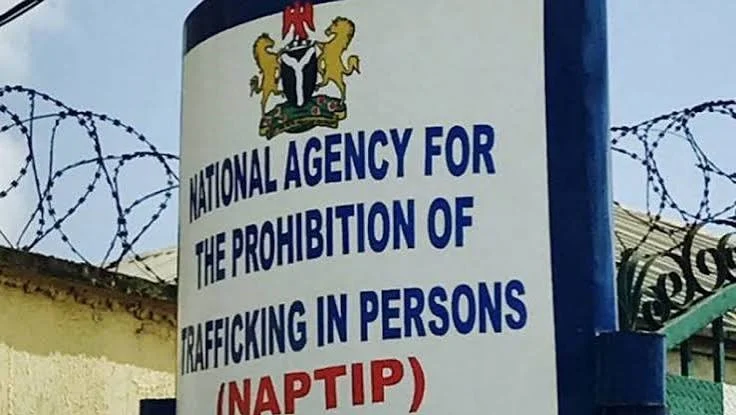
The National Agency for the Prohibition of Trafficking in Persons (NAPTIP) has recorded significant progress in the fight against Sexual and Gender-Based Violence (SGBV), securing over 20 convictions and rescuing more than 3,000 victims across Nigeria in 2026.
This was disclosed by the agency’s Head of Press and Public Relations, Vincent Adekoye, during an interview in Abuja. According to him, three of the convictions resulted in life imprisonment, with the majority of cases involving rape and other forms of abuse.
Adekoye revealed that from January to date, the agency has intensified efforts in identifying, rescuing, and rehabilitating victims trapped in critical situations, while also ensuring perpetrators are brought to justice.
“We have rescued over 3,000 victims and made numerous arrests. Many suspects are currently being prosecuted,” he stated.
He noted that NAPTIP has strengthened its operational capacity through strategic collaboration with security agencies, including the Nigeria Police Force and the Nigeria Security and Civil Defence Corps, as well as relevant ministries and stakeholders.
In addition to enforcement, the agency has expanded its prevention strategy by engaging communities, training frontline responders, and promoting awareness to improve reporting and response to SGBV cases.
Related News:
NAPTIP Rescues 12 Trafficked Nigerians from Ghana
258 Human Trafficking Victims Rescued by NAPTIP in Jigawa
NAPTIP Busts Child Trafficking Ring in Enugu, Rescues Two Minors
NAPTIP Rescues 202 Human Trafficking Victims in Katsina Within Seven Months
Adekoye warned offenders to desist from such crimes, emphasizing that perpetrators risk prosecution under existing laws such as the Violence Against Persons (Prohibition) Act and the Cybercrimes Amendment Act.
He also highlighted international frameworks supporting victims’ rights, including the Convention on the Elimination of All Forms of Discrimination Against Women (CEDAW), the Universal Declaration of Human Rights, and the Maputo Protocol.
To further strengthen advocacy, NAPTIP recently inaugurated a Sexual and Gender-Based Violence Media Corps aimed at enhancing media involvement in tackling the issue.
The agency urged journalists to adopt a more investigative approach to reporting SGBV cases by examining root causes such as cultural norms, institutional gaps, and societal behaviors, rather than focusing solely on individual incidents.
Adekoye also stressed the importance of victim-centered reporting, calling on the media to uphold the dignity, privacy, and safety of survivors while helping them rebuild trust within society.
The development reflects NAPTIP’s renewed commitment to combating human trafficking and gender-based violence through a combination of enforcement, prevention, and public engagement strategies.
About The Author