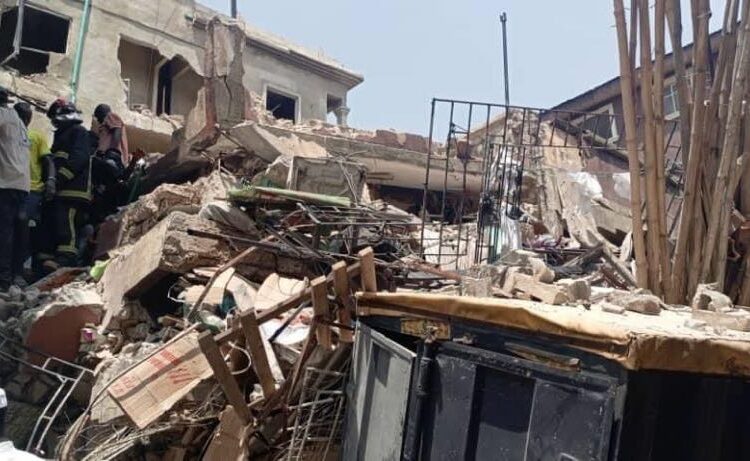
The Lagos State Government has sealed 827 construction sites across the state over the past year as part of efforts to reduce building collapses and enforce compliance with safety regulations.
The General Manager of the Lagos State Materials Testing Laboratory (LSMTL), Engr. Olayinka Abdul, disclosed this during the 2026 Ministerial Press Briefing held in Ikeja.
She said the closures were part of an intensified enforcement campaign aimed at ensuring that developers adhere to approved construction standards.
Inside Lagos State:
Lagos Recovers ₦270m for Real Estate Fraud Victims
Lagos Ramp Collapse Causes Traffic Gridlock
Lagos Deploys Aerial Patrols to Boost Security and Reassure Residents
Lagos School Principal, Husband Found Dead In Badagry Hotel Room
Police Arrest Man Over Alleged N1bn Fuel Theft, Expose Staged Kidnap Plot in Lagos
Five Burnt to Death, 10 Injured in Ogun Lone Crash on Abeokuta–Lagos Expressway
According to Abdul, the agency issued 3,181 notices to developers and property owners within the review period and carried out hundreds of compliance inspections across construction sites.
She noted that many of the sealed sites failed to comply with regulatory requirements, including mandatory material testing and quality assurance procedures.
She explained that the government has adopted a more proactive approach to monitoring construction activities, moving beyond traditional testing methods to an intelligence-driven system designed to identify and address violations before they lead to structural failures.
Abdul attributed many building collapse incidents to developments in informal settlements and unapproved projects where developers often bypass established safety procedures.
She stressed that enforcement actions are intended to send a strong message that all construction projects must meet the required standards, regardless of the size of the development or the influence of those involved.
To strengthen oversight, the agency has introduced an electronic Materials Testing Management System that digitally tracks construction samples submitted for testing.
The system is designed to improve transparency, eliminate human interference and reduce the possibility of result manipulation.
The LSMTL has also made testing compulsory at key stages of construction, including foundation work, structural framing and roofing. In addition, registered construction sites are now geo-tagged and monitored using GPS technology, enabling officials to track projects and verify compliance more effectively.
Abdul urged residents to ensure that newly completed buildings have undergone the required safety tests before moving in. She emphasized that preventing building collapse requires cooperation among regulators, developers and the public.
The Lagos State Government reaffirmed its commitment to improving construction safety and achieving a significant reduction in building collapse incidents across the state.
About The Author