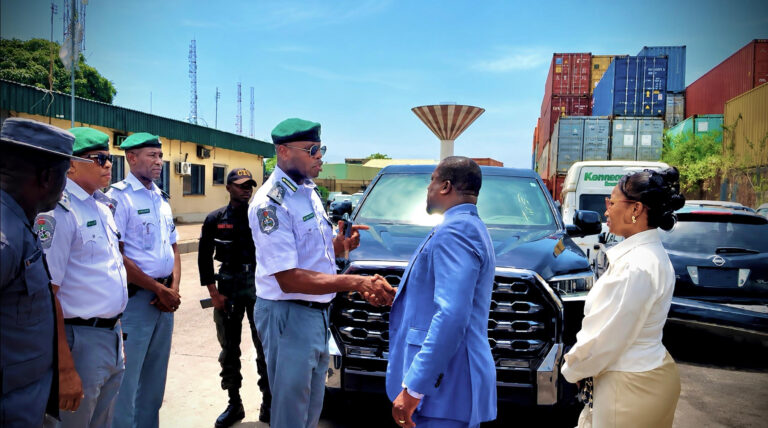
The Nigeria Customs Service has intercepted several luxury vehicles allegedly stolen in Canada and smuggled into Nigeria through the Tin Can Island Port in Lagos, exposing what officials described as an international vehicle theft and trafficking network.
The recovered automobiles, which included high-end brands such as Rolls-Royce, Lamborghini, Mercedes-Benz, and Range Rover, were officially handed over to Canadian authorities during a ceremony held at the Lagos port facility.
According to Customs authorities, the operation was carried out following months of intelligence sharing and collaboration between the Nigeria Customs Service and the Royal Canadian Mounted Police.
Investigators reportedly tracked the stolen vehicles from Canada through international shipping routes before discovering them in Nigeria.
Among the vehicles recovered were a 2019 Lexus RX350, a Mercedes-Benz G550, a 2023 Range Rover, a Lamborghini Huracán, a Rolls-Royce Dawn Convertible, a Lamborghini Aventador, and a Toyota Tundra.
Inside Lagos:
Police Foil ₦713.9m Bank Scam in Abuja, Arrest Key Suspects
Suspect Confesses to Being Hired for N500,000 to Carry Out Acid Attack on Lagos Spa Worker
Lagos Closes Pinnock Beach Estate, Surulere, Ajah Properties for Illegal Sewage toDischarge
Officials confirmed that all the vehicles had been reported stolen abroad before being illegally exported into Nigeria.
Speaking during the handover event, the Customs Area Controller of Tin Can Island Port, Comptroller Frank Onyeka, disclosed that one of the vehicles had been secretly hidden inside a container carrying other automobiles in an attempt to evade detection.
He explained that Customs officers immediately placed the shipment under surveillance after receiving intelligence reports from Canadian authorities.
According to him, the suspicious consignment never left Customs custody before enforcement actions began.
Onyeka described the interception as a significant breakthrough in the fight against transnational organised crime, noting that criminal groups increasingly use global shipping networks to move stolen luxury vehicles across continents while disguising them as legitimate imports.
The Customs boss also revealed that some individuals attempted to interfere in the recovery process, but the service insisted on dealing directly with representatives of the Canadian government to maintain transparency and preserve the integrity of the investigation.
He added that the successful operation demonstrated Nigeria’s growing capacity in cargo profiling, intelligence gathering, and maritime enforcement, particularly in combating cross-border crimes involving stolen assets and illicit trade.
Security analysts say African ports have become attractive destinations for international car theft syndicates because of the rising demand for exotic vehicles and weak verification systems in some countries.
However, Nigerian authorities insist that recent improvements in port surveillance and intelligence cooperation are helping to tighten security at major seaports.
Tin Can Island Port remains one of Nigeria’s busiest gateways for imported vehicles and container shipments, handling thousands of consignments annually.
About The Author