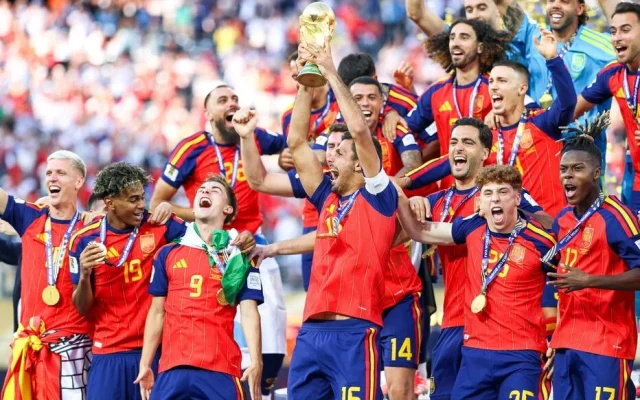
Spain’s historic victory at the 2026 FIFA World Cup may come with a costly twist, as reports suggest the team could forfeit up to 30 percent of its prize money to United States federal taxes.
Following their 1–0 triumph over Argentina in the final held at the New York/New Jersey Stadium on July 19, Spain secured a substantial share of FIFA’s record $871 million tournament prize pool.
The champions are expected to earn approximately $50 million, but a significant portion of that amount may be subject to U.S. taxation laws.
Under existing regulations, income generated from activities conducted within the United States is taxable, including earnings by foreign athletes. Typically, non-resident athletes face a federal withholding tax of up to 30 percent unless mitigated by tax treaties or special exemptions.
Concerns have been raised by U.S. lawmakers regarding the potential tax burden. Congressman Tim Burchett described the policy as excessive, arguing that such taxation could discourage international participation in events hosted by the United States.
Similarly, Congressman Jonathan Jackson criticized the system, stating that it places an unfair burden on athletes while corporations benefit from loopholes. Congressman Burgess Owens also echoed concerns, noting that while the U.S. remains proud to host global sporting events, the tax implications may be too steep.
Related News:
World Cup 2026: Messi Set to Retire from Argentina After Final Defeat
World Cup 2026: Zidane Appointed France Head Coach on Long-Term Deal
Oliseh Blasts Argentina Over World Cup Final Clash, Praises Spain’s Victory
Further analysis suggests the financial impact could be even greater. In addition to federal taxes, players may be liable for state-level “jock taxes” depending on where matches were played.
States like New Jersey and California impose high income tax rates, which could push the total tax liability to as much as 40 percent of earnings before additional taxation in the players’ home countries.
Unlike previous World Cup hosts such as Brazil, Russia, and Qatar, the United States reportedly did not extend comprehensive tax exemptions to all participants.
While FIFA and national federations may benefit from certain exemptions, individual players, coaches, and staff are largely responsible for their own tax obligations.
As debates continue, the situation highlights broader concerns about taxation policies and their potential impact on international sporting events hosted in the United States.
About the Author