Nigeria has identified two additional suspected Ebola cases and 53 primary contacts as health authorities intensify efforts to prevent the disease from spreading.
The Director-General of the Nigeria Centre for Disease Control and Prevention (NCDC), Jide Idris, disclosed this during a press briefing in Abuja on Sunday.
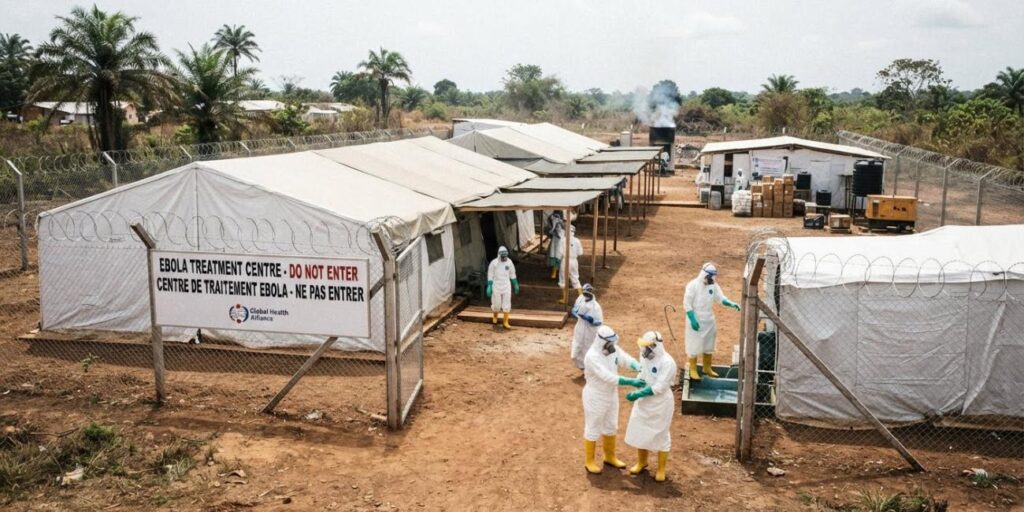
According to Idris, the country has established isolation and quarantine facilities while expanding its laboratory capacity to support the rapid testing of suspected cases.
He said about 12 public and private laboratories were now available to conduct Ebola tests, adding that surveillance had been strengthened to ensure suspected infections were investigated promptly.
Idris urged healthcare facilities nationwide to improve screening, patient triage and infection prevention measures. He also stressed the need to provide healthcare workers with adequate personal protective equipment.
The NCDC is monitoring people who may have been exposed to the virus for 21 days after their last possible exposure. Authorities have also appealed to individuals contacted by public health officials to cooperate with contact-tracing teams.
The development follows Nigeria’s confirmation of an Ebola infection in the Federal Capital Territory on October 20, 2026.
The confirmed patient, a woman who reportedly arrived in Nigeria on an international flight from Uganda, was admitted to a private hospital for several days before her infection was confirmed.
She tested positive for the Bundibugyo strain of Ebola, which was first identified during an outbreak in Uganda in 2007.
Health authorities had previously identified 44 contacts linked to the confirmed case. The number has now increased to 53, comprising 44 people connected to the health facility where the patient was treated, three household members, three people who attended to her at Julius Berger Clinic and three members of the team that collected her samples.
Idris explained that investigators were also working to identify other people who might have been exposed through those already listed as contacts.
He acknowledged gaps in public health preparedness at the state level, noting that training and capacity development remained priorities for the agency.
Meanwhile, genomic analysis conducted by the NCDC and Professor Christian Happi’s laboratory at Redeemer’s University in Ede, Osun State, reportedly showed that the virus identified in Nigeria was closely related to one found in a case in Kenya.
The Coordinating Minister of Health and Social Welfare, Professor Muhammad Ali Pate, disclosed the finding on Friday. He said there was no known travel connection between the Kenyan case and Nigeria, although genetic analysis suggested the viruses were related.
Related News:
NYSC Abduction: Parents Seek Olubadan’s Intervention as Families Await Safe Release
Panic in Lagos Market as IED Explosion Injures One, Police Assure Residents of Safety
Millions of Naira Worth of Goods Destroyed in Ibadan Railway Complex Fire
What shaped my life -Actress Bimbo Ademoye
Nigeria previously battled an Ebola outbreak in 2014 after an infected traveller from Liberia arrived in Lagos. The country recorded 20 cases, including 19 laboratory-confirmed infections and one probable case, before the outbreak was contained.
The Federal Government has maintained that there is currently no evidence of community transmission in the ongoing outbreak. Authorities said high-risk contacts had been quarantined and other exposed individuals isolated in line with public health guidelines.
The government has also mobilised additional resources to strengthen the NCDC’s response, while directing state governments to urgently complete their Ebola preparedness plans.
Health officials say their immediate priority is to contain the confirmed infection, monitor suspected cases and prevent further transmission.
About the Author