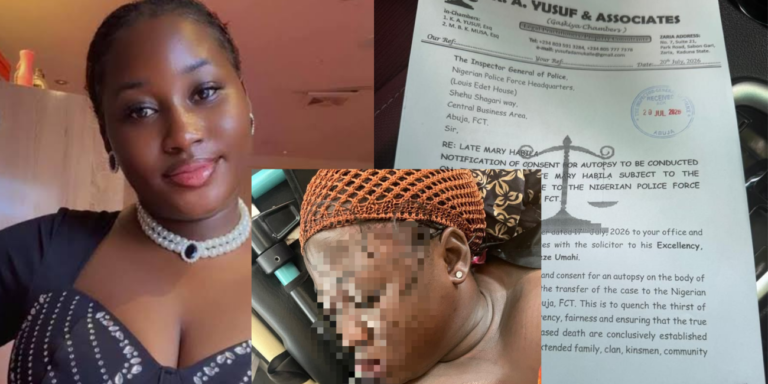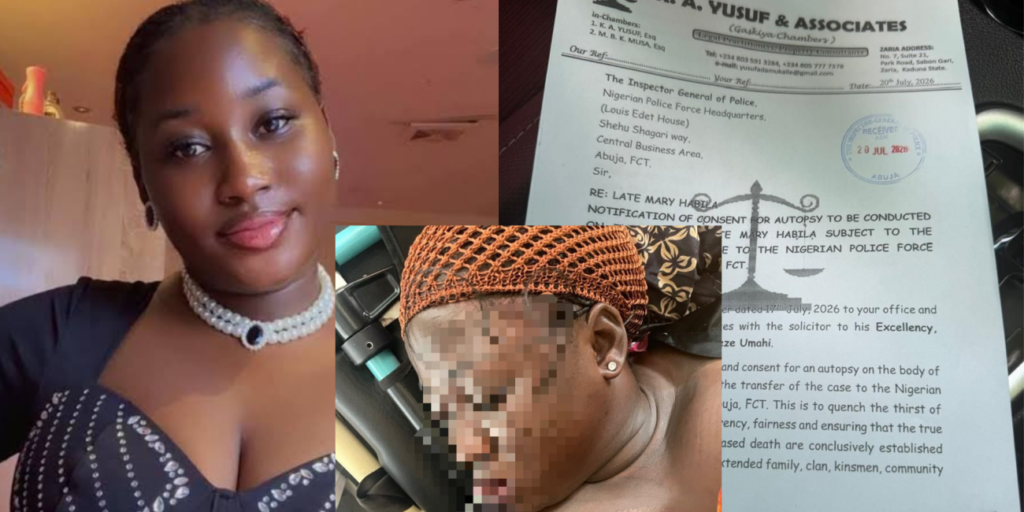
The body of Mary Habila, the young woman whose death at the country home of Minister of Works David Umahi has generated nationwide attention, has been transferred to the National Hospital in Abuja ahead of a planned forensic autopsy.
The move follows an agreement between lawyers representing Umahi and Habila’s family over the conduct of the autopsy and the transfer of the investigation to the Federal Capital Territory.
According to correspondence exchanged between both parties, Habila’s father agreed to the autopsy on the condition that the investigation be handled by the Nigeria Police Force Headquarters in Abuja. The family also requested that an independent pathologist conduct the examination after a proper inspection of the body.
Sources familiar with the investigation said the remains were moved to Abuja last week as preparations for the forensic examination progressed.
However, the planned autopsy has continued to stir debate, with concerns raised over the transparency of the process and the identity of the medical experts expected to carry out the examination. The case has sparked calls from members of the public for an independent and credible forensic investigation.
The development comes after police authorities in Abuja reportedly assumed responsibility for the investigation, taking over the case from the Ebonyi State Police Command.
Mary Habila died on June 27 at Umahi’s private residence in Uburu, Ohaozara Local Government Area of Ebonyi State under circumstances that remain the subject of investigation.
Umahi has consistently denied any wrongdoing, maintaining that he supports a thorough forensic autopsy to determine the exact cause of Habila’s death.
Related News:
‘Small Mindset’ Hindering Growth of Nigerian Industries — Mary Njoku
Bandits attack Kaduna Community, abduct 14 residents
Ebonyi Traditional Council Declares Curfew, Orders Spiritual Cleansing After Mary Habila’s Death
Abuja Police Take Over Investigation Into Mary Habila’s Death at Minister Umahi’s Residence
Earlier, the Ebonyi State Police Command insisted that the body could not be released for burial until a forensic examination was conducted, citing legal advice that an autopsy was necessary to establish the cause of the unexplained death.
Although Habila’s family initially opposed the procedure and sought the immediate release of her remains for burial, they later agreed to the autopsy while insisting on an independent investigation in Abuja.
The outcome of the forensic examination is expected to play a key role in determining the next steps in the ongoing police investigation.
About The Author