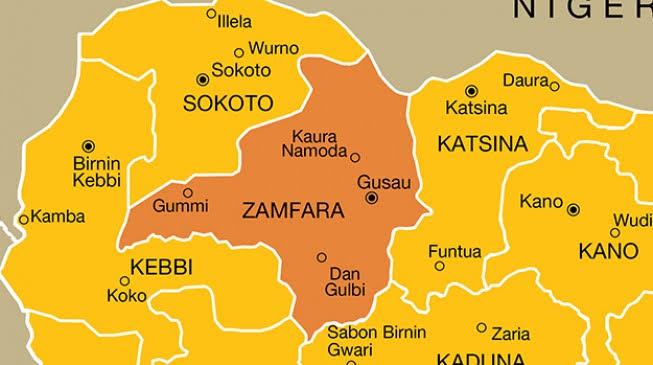
A young boy identified as Umar from Magami town in Gusau Local Government Area of Zamfara State has shared a heartbreaking account of how bandits allegedly killed his father before his eyes a traumatic experience that has shaped his life’s ambition.
In an emotional video circulating online, Umar, speaking in Hausa, recounted the tragic incident, revealing that he now dreams of joining the Nigerian Army, not for fame or fortune, but to fight insecurity and seek justice for his late father.
According to the boy, the attack occurred shortly after his father returned from a day’s work on the farm.
He had harvested seven baskets of red peppers (tatase), sold them at the market, and bought food items, including rice, for the family.
“He came back and said we should cook rice,” Umar narrated. “He went to get pepper from the farm for the soup, but on his way back, he never made it. They killed him.”
Umar further explained that the attackers later invaded their home, unleashing violence on the family.
“They forced their way into the house and attacked everyone. I watched them kill my father,” he said.
The painful experience, he added, has fueled his determination to become a soldier in the future.
“Yes, I want to join the army,” Umar said. “I have the intention of fighting back.”
Related News:
Police Rescue Three Abducted Teenagers in Zamfara Forest Operation
Police Neutralise Bandit, Arrest Three in Zamfara
Bandits Kill Teacher After Collecting Ransom in Zamfara
Bandits Kill 4, Abduct Travellers in Fresh Zamfara Attacks
Despite his grief and resolve, the young boy expressed faith, offering prayers for his father and others who lost their lives to similar attacks.
“Whoever dies, may God have mercy on them. God does not abandon anyone. May God also have mercy on my father,” he said.
Zamfara State remains one of the regions hardest hit by armed banditry in Nigeria’s North-West, with repeated attacks leading to loss of lives, displacement, and destruction of livelihoods.
Umar’s story highlights the deep scars left on communities and the growing impact of insecurity on vulnerable populations, especially children.
About The Author