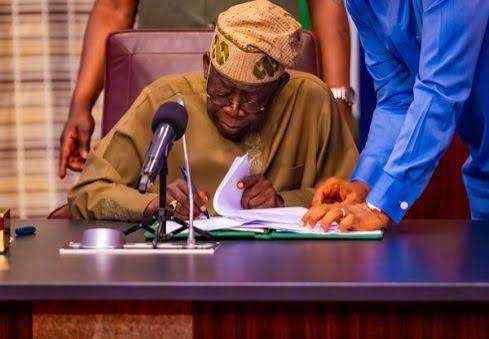
President Bola Ahmed Tinubu has officially signed the Electoral Act, 2022 (Repeal and Re-Enactment) Bill 2026 into law, sparking widespread protests across the country.
The bill was passed by the National Assembly after months of debates, scrutiny, and political disputes.
A major point of contention is Clause 60, which mandates the electronic transmission of election results from polling units to collation centres.
The clause also allows for manual transmission using Form EC8A in the event of network failure, a provision critics argue could compromise transparency in the electoral process.
Tensions escalated in the Senate when Senator Enyinnaya Abaribe (ADC, Abia South) demanded a division on Clause 60(3), opposing the fallback to manual transmission.
Related News:
Tinubu Meets NLC Leaders Over Planned Nationwide Protest
President Tinubu Denies Religious Genocide Claims in Nigeria
‘I Was Never Friends with Tinubu’ — El-Rufai Speaks Out
Supreme Court imposes N5m fine against ex-presidential candidate over frivolous suit against Tinubu
Despite opposition objections, 55 senators voted to retain the clause, while 15 voted against it. Procedural disputes, heated exchanges, and closed-door consultations marked the deliberations.
In the House of Representatives, opposition lawmakers staged a walkout in protest over moves to rescind the bill’s earlier passage.
Members accused leadership of bias and procedural irregularities, and the session devolved into chaos, leaving the plenary largely empty.
Public demonstrations have also erupted in Abuja and other cities, with citizens expressing concern over the impact of the new law on the credibility of upcoming elections, particularly the 2027 general elections.
Observers warn that the controversy surrounding Clause 60 and the timing of the elections could affect voter turnout and undermine confidence in Nigeria’s electoral process.
About The Author