Nigeria may have missed out on qualifying for the 2026 FIFA World Cup, but Nigerian heritage will still be strongly represented when the tournament kicks off on June 11 across the United States, Mexico, and Canada.
The Super Eagles lost out after a penalty shootout defeat to DR Congo, marking a second consecutive World Cup absence after missing Qatar 2022. Despite this, around 16 players with Nigerian roots are expected to feature for other national teams at the expanded 48-nation tournament.
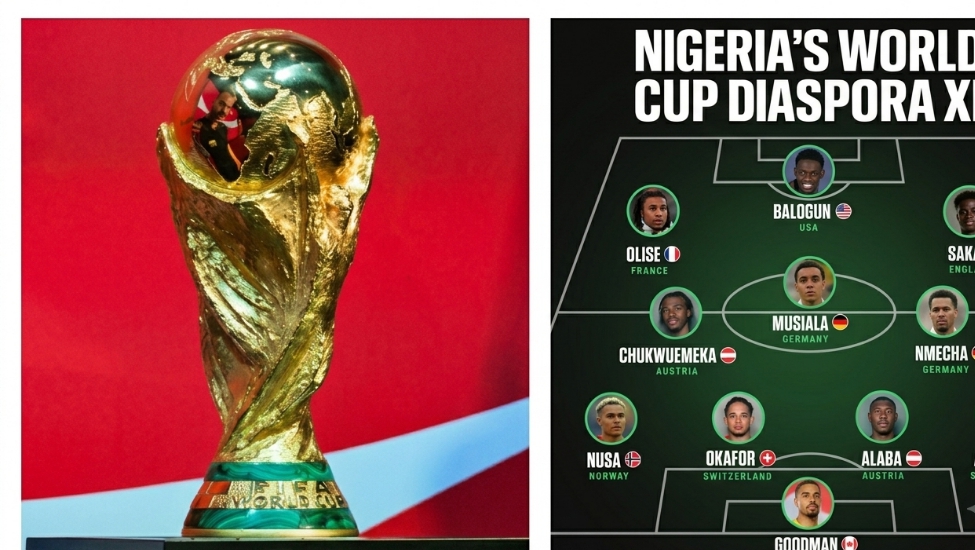
A widely shared post attributed to ESPN Africa listed the players, who qualify through birth, parentage, or ancestry. England will have Bukayo Saka, Eberechi Eze, and Noni Madueke, all born in England to Nigerian parents. Germany’s squad includes Jamal Musiala and Felix Nmecha, both with Nigerian fathers.
France’s Michael Olise, eligible for several countries, chose to represent Les Bleus. Switzerland will field Manuel Akanji and Noah Okafor, while Austria’s team features David Alaba and Carney Chukwuemeka. The United States has Folarin Balogun, and Canada will play Tani Oluwaseyi, Promise David, and Owen Goodman.
Other players include Antonio Nusa for Norway and Ime Okon for South Africa. Together, they represent about nine national teams and highlight the global reach of Nigerian football talent.
Related news:
World Cup: Maguire Shocked After England Squad Omission
T20 World Cup: Nigeria To Host Africa Sub-Regional
Portugal Stars Call Nigeria Friendly ‘Crucial’ for World Cup Prep
Ronaldo Makes History with Sixth World Cup as Portugal Unveil 2026 Squad
World Cup 2026: Ancelotti announces Brazil squad for tournament
The presence of these players has sparked debate among fans and analysts about what a “Nigerian XI” of diaspora stars could look like. Names such as Saka, Musiala, Olise, Akanji, and Alaba often feature in those discussions due to their success in Europe’s top leagues.
It also raises questions about player development and talent retention in Nigeria. While stars like Victor Osimhen and Ademola Lookman continue to represent the Super Eagles, missing qualification has intensified calls for reforms to stop losing top talent.
For Nigerian fans, the tournament will bring mixed emotions. There is disappointment over the team’s absence, but also pride in seeing so many players of Nigerian heritage compete on the world’s biggest stage.
The 2026 World Cup runs until July 19 across the three host nations. Though Nigeria will not be there as a team, its football influence will be visible throughout.
About The Author