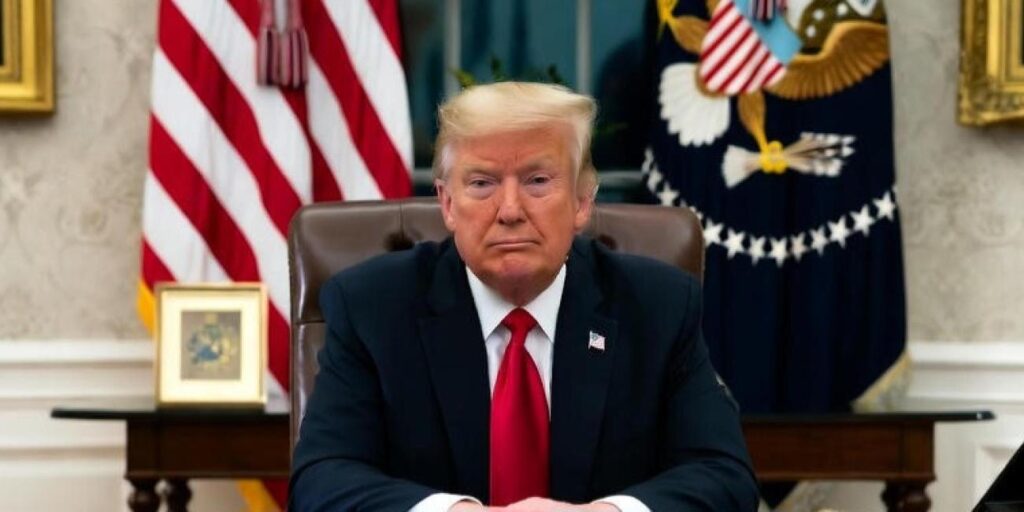
U.S. President Donald Trump has claimed that American forces destroyed seven Iranian boats in the strategically vital Strait of Hormuz, amid escalating tensions in the region.
Trump made the assertion on Monday via his Truth Social platform, stating that the vessels described as Iranian “fast boats” were neutralised after allegedly engaging in hostile actions against ships operating in the area.
According to him, Iran had opened fire on vessels connected to what he referred to as “Project Freedom,” including a cargo ship from South Korea.
He suggested that the incident could warrant greater international involvement, calling on South Korea to participate in the ongoing mission.
Related News:
Trump Issues U.S. Navy ‘Shoot-On-Sight’ Order on Boats Laying Mines in Strait of Hormuz
Iran War Will End Soon, Trump Says
Trump Labels Grammys ‘Unwatchable,’ Threatens Legal Action
Nnamdi Kanu Alerts Trump on Southeast Genocide
Soyinka reacts to Trump’s Christian genocide allegation
“Iran has taken shots at unrelated nations with respect to ship movement, including a South Korean cargo ship,” Trump wrote. “Perhaps it’s time for South Korea to come and join the mission.”
Trump further claimed that the destruction of the seven boats represents a significant blow to Iran’s operational capacity in the area, implying that such vessels make up a substantial portion of its remaining presence in the waterway.
Despite the confrontation, he noted that there had been no confirmed damage to other vessels passing through the Strait, aside from the reported incident involving the South Korean ship.
He also disclosed that top U.S. military officials, including Defense Secretary Pete Hegseth and Chairman of the Joint Chiefs of Staff Dan Caine, are expected to brief the press on the situation in a scheduled conference.
The Strait of Hormuz remains one of the world’s most critical maritime chokepoints, with a significant share of global oil shipments passing through it daily. Any escalation in the region is likely to raise concerns over global energy supply and international security.
About The Author