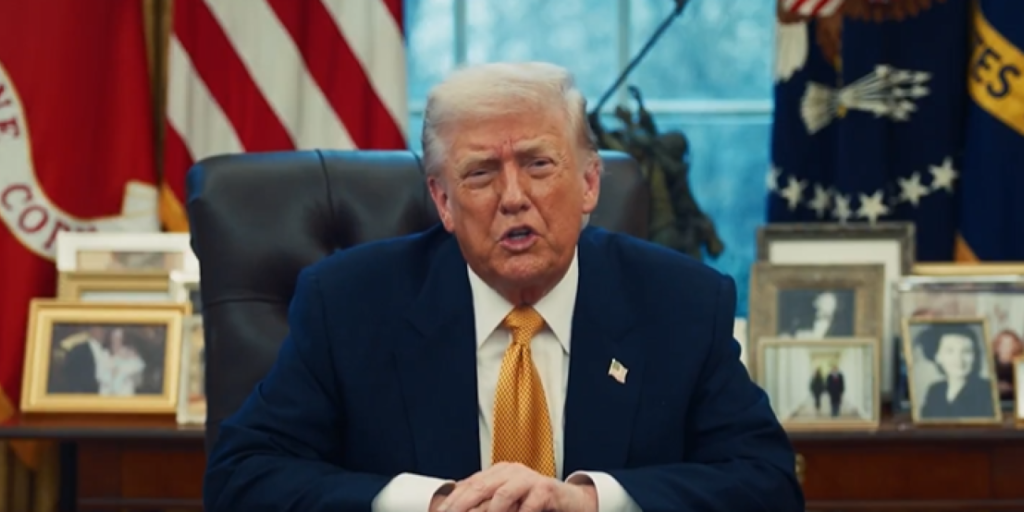
United States President Donald Trump has threatened fresh military action against Iran if ongoing nuclear negotiations between Washington and Tehran fail to produce an agreement.
Speaking on Wednesday, May 20, Trump said discussions with Iran had entered the “final stages,” warning that the United States could take harsh action if both sides fail to reach a deal.
“We’re in the final stages of Iran. We’ll see what happens. Either have a deal or we’re going to do some things that are a little bit nasty,” Trump reportedly said.
During an address at the U.S. Coast Guard Academy later the same day, Trump repeated the warning, stating that the United States “may have to hit them very hard” while insisting Iran would never be allowed to develop nuclear weapons.
The latest remarks came about six weeks after Trump suspended Operation Epic Fury under a ceasefire arrangement intended to create room for peace negotiations following months of U.S.-Israeli military operations against Iran.
Related News:
Trump Issues Military Warning Over Iranian Fast Boats Approaching US Blockade
Trump Issues Final Warning to Iran, Says ‘Whole Civilization Could Die Tonight’
FIFA May Urge Trump to Suspend ICE Raids During World Cup
Despite the ceasefire, tensions between both countries have remained high, with diplomatic talks making little progress and both sides continuing to exchange threats.
Iranian authorities reacted strongly to Trump’s comments, accusing Washington of preparing for another military campaign.
The Islamic Revolutionary Guard Corps warned that any renewed attack on Iran would trigger wider retaliation beyond the Middle East.
Iran’s parliament speaker and chief negotiator, Mohammad Baqer Qalibaf, also claimed recent actions by the United States suggested preparations for fresh attacks.
Meanwhile, Iranian Foreign Ministry spokesman Esmaeil Baghaei accused Washington of “piracy” over restrictions affecting Iranian ports and ships, while insisting Tehran remained committed to negotiations despite deep mistrust of the U.S.
Pakistan has continued mediation efforts in the crisis, with a Pakistani official reportedly visiting Tehran on Wednesday to relay messages between both countries.
Iran recently submitted a new proposal to Washington, though reports suggested it repeated several earlier demands already rejected by the Trump administration. These demands reportedly include compensation for war damages, removal of sanctions, release of frozen Iranian assets, and withdrawal of U.S. troops from the region.
The Strait of Hormuz has also remained a major source of tension. Iran has restricted access to the strategic waterway for many foreign vessels since the conflict escalated earlier this year, affecting global oil supplies.
However, reports indicated that two Chinese oil tankers carrying about four million barrels of crude oil successfully passed through the strait on Wednesday after Iran reportedly eased restrictions for Chinese vessels.
The crisis has continued to affect global oil markets, with Brent crude prices reportedly falling nearly five per cent amid renewed hopes for a diplomatic settlement.
The conflict involving Iran, the United States and Israel has already resulted in thousands of deaths since violence escalated earlier this year, while military operations in Lebanon against the Iran-backed Hezbollah group have displaced hundreds of thousands of civilians.
Trump and Israeli Prime Minister Benjamin Netanyahu have maintained that the military campaign is aimed at weakening Iran’s regional influence, dismantling its nuclear programme and destroying its missile capabilities.
About The Author