President Bola Tinubu has defended the Federal Government’s fresh borrowing plan, insisting that the proposed loans will finance critical infrastructure, create jobs and expand economic opportunities, amid questions over Nigeria’s rising debt burden and the delivery of projects funded by previous borrowings.
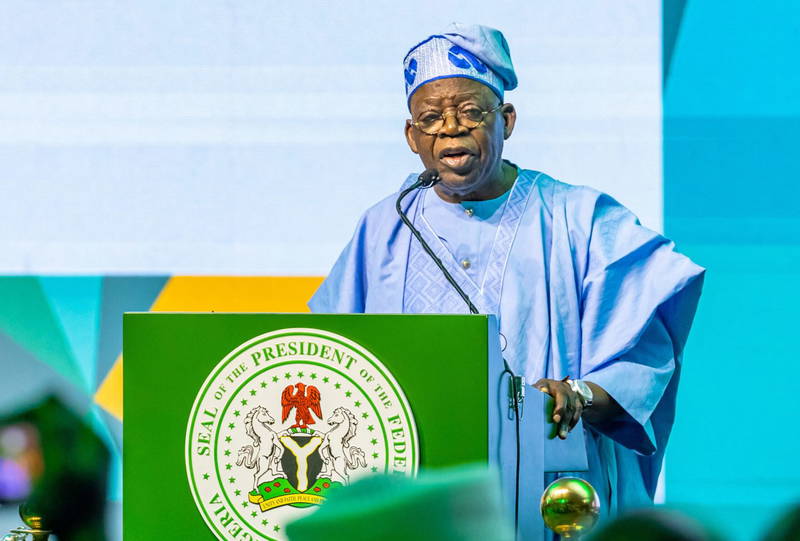
Tinubu, in an essay titled “From Reforms to Delivery: Our Infrastructure Investment and Growth Strategy,” shared by his spokesman, Bayo Onanuga, on X on Thursday, argued that the value generated by borrowed funds mattered more than the amount borrowed.
“The real question is not how much we borrow, but what we build, what value we create and what future we leave behind,” the President said.
His defence follows the administration’s request for approval to borrow $20.52bn and €1.045bn from external sources, a proposal that has raised concerns about debt sustainability, transparency and the returns Nigerians can expect from additional borrowing.
Tinubu said the funds would support major infrastructure projects, including the Lagos-Calabar Coastal Highway, Sokoto-Badagry Superhighway, Trans-Sahara Superhighway, electricity grid upgrades and the modernisation of key commercial ports in Lagos.
Related News:
NDC spokesperson questions Tinubu’s fresh loan request, demands transparency
Tinubu Orders Immediate Rescue of Niger State Abduction Victims
He argued that the projects, alongside investments in healthcare, education and vocational training, would improve connectivity, lower transportation costs, stimulate industrial and agricultural production and attract private investment.
However, the projected economic benefits will depend on effective implementation, transparent procurement, timely completion and independent verification of project outcomes.
The President said the Lagos-Calabar Coastal Highway was expected to reduce logistics costs along its corridor by 15 to 20 per cent and potentially contribute up to two per cent to Nigeria’s gross domestic product through increased trade, tourism and industrial activity.
He also projected that the highway could generate about 100,000 direct jobs in construction and engineering, alongside more than 150,000 indirect jobs across logistics, materials supply and related sectors.
The projections, however, remain estimates rather than evidence of benefits already delivered. Their credibility will ultimately depend on the project’s completion, actual traffic and trade volumes, employment figures and measurable reductions in transportation costs.
Tinubu described the infrastructure programme as central to his administration’s ambition to grow Nigeria’s economy to $1tn by 2030, arguing that the target would require infrastructure capable of supporting a substantially larger economy.
He also defended the economic reforms introduced since May 2023, including petrol subsidy removal, foreign exchange market reforms and tax changes, saying they had strengthened public finances and improved investor confidence.
The President cited real GDP growth of 4.43 per cent in the second quarter of 2026 and a decline in headline inflation to 14.63 per cent in September from 20.98 per cent a year earlier.
He added that gross external reserves stood at $55.1bn as of October 9, 2026, with net reserves estimated at about $46bn, while the tax-to-GDP ratio had increased to 12.5 per cent from seven per cent.
While the figures point to improvements in some economic indicators, they do not, on their own, establish that the proposed borrowing is affordable or that the projects will generate sufficient returns to justify the additional debt.
The administration has yet to demonstrate through the figures cited in the statement how much previous infrastructure borrowing has translated into completed projects, additional productive capacity or revenue capable of supporting repayment.
Tinubu said improved economic indicators and assessments by international credit rating agencies had strengthened Nigeria’s standing in financial markets and reduced its borrowing costs.
He maintained that the government was moving away from borrowing to meet short-term fiscal pressures towards longer-term financing for investments expected to generate economic returns and reduce refinancing risks.
But the sustainability of the plan will depend not only on the availability of financing or the terms secured, but also on the cost of servicing the debt, the currencies in which repayments are due, the projects’ implementation schedules and the revenues or wider economic benefits they generate.
The National Assembly’s scrutiny of the request will therefore be critical. Lawmakers will need clear details of the proposed loans, including interest rates, repayment periods, fees, currency risks, disbursement schedules and the specific projects each facility will finance.
A transparent project-by-project register showing amounts borrowed and disbursed, contractors, implementation progress, completion timelines and independently verified results would also help Nigerians assess whether previous loans have delivered value.
Tinubu outlined five priorities for the next phase of the administration’s economic strategy: improving food affordability and energy price stability; strengthening fiscal discipline and budget coordination; completing major infrastructure projects; improving economic policies and regulatory efficiency; and expanding household support and human development programmes.
He said the administration’s performance would ultimately be measured by completed projects, increased investment, job creation and improvements in living standards.
“Securing financing is not the achievement. Completing the project, delivering value and improving the lives of Nigerians is the achievement,” the President said.
The central test of the proposed borrowing, therefore, will be whether the government can translate the funds into verifiable public benefits while keeping debt-servicing obligations manageable and protecting future budgets from excessive repayment pressures.
About the Author