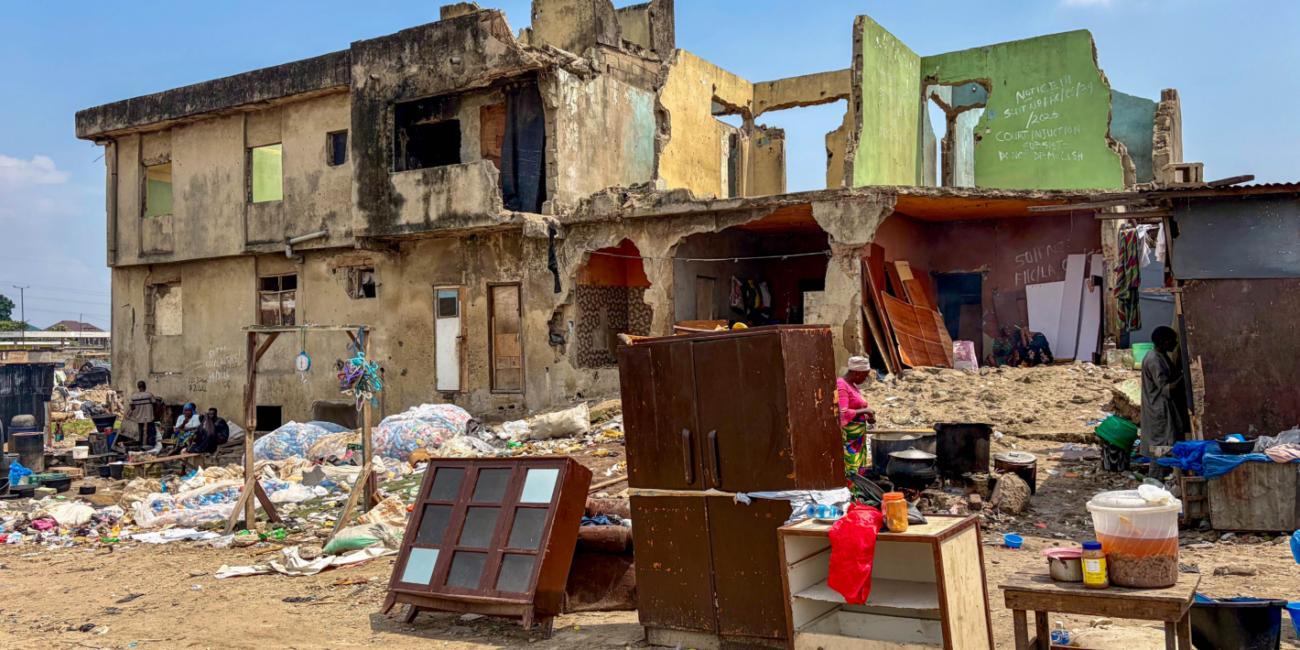
Amnesty International has called on the Lagos State Government to immediately stop the forced demolition of homes in several communities across the state, alleging that the exercise has displaced thousands of families and resulted in multiple deaths.
The international human rights organisation made the demand in a statement released on Wednesday, November 4, 2026, following investigations into demolitions carried out in different parts of Lagos.
According to the organisation, more than 50,000 residents were displaced in Makoko alone between December 2025 and January 2026. It also said approximately 5,000 houses were destroyed during recent demolition exercises in Makoko, Oworonshoki and Mile 12.
Amnesty International disclosed that its investigation, conducted between October 12 and 16, 2026, documented continued demolitions, displacement and alleged human rights abuses in the affected communities.
The organisation accused security operatives, including police officers, of sometimes working with suspected thugs to attack residents who resisted the destruction of their homes.
The Director of Amnesty International Nigeria, Isa Sanusi, said the Lagos State Government had been carrying out forced evictions since March 2016 without proper consultation, sufficient notice or alternative accommodation for affected residents.
Sanusi described the situation in Makoko and Oworonshoki as a serious violation of human rights, claiming that some families had their houses demolished while they were still sleeping.
He said deaths reportedly connected to the demolitions showed the need for the state government to be held accountable.
The organisation further disclosed that the recent demolition operations destroyed 42 schools and 20 healthcare facilities, alongside churches, mosques and other places of worship.
It said residents reported at least 12 deaths connected to the demolitions, including incidents allegedly involving tear gas exposure and building collapses.
In Mosafejo and Idiaraba communities in Oworonshoki, residents also reportedly linked more than 30 additional deaths to trauma, lack of medical care and exposure to unhealthy conditions following the demolitions.
Amnesty International added that more than 30 private schools, over 25 churches and 10 mosques were destroyed during the operations.
In Mile 12, residents reportedly said more than 250 houses were demolished in one area, leaving several families homeless without adequate notice, compensation or alternative accommodation.
The organisation also alleged that at least 14 residents were arrested and detained for about one month following protests against the demolitions in Oworonshoki.
One affected resident reportedly told the organisation that he lost two of his three children under circumstances connected to the demolition exercise, describing the incident as a painful experience for his family.
The demolitions have also affected the livelihoods of residents, particularly fishing families in Makoko who depend on the water for their survival.
According to the organisation, several families lost their homes, boats, fishing nets and engines, while children, pregnant women and elderly people were left struggling to access shelter, healthcare and education.
Residents also reported alleged tear gas attacks, physical assaults and arrests during protests against the destruction of their homes.
Amnesty International said residents were initially informed that the demolition exercise would only affect buildings located beneath high-tension electricity lines. However, the operations allegedly extended beyond those areas, resulting in the destruction of thousands of homes.
The organisation also raised concerns over the government’s alleged failure to comply with a Federal High Court judgment obtained by affected residents in July 2025, which restrained the Lagos State Government from demolishing the community.
Inside Lagos state:
Lagos Expressway Crash: Four Vehicles Collide, Cause Heavy Traffic At Cele
Many Feared Dead as Two Trucks Collide on Lagos-Benin Expressway in Edo
Despite the court order, the demolition operations reportedly continued.
Amnesty International urged the Lagos State Government to investigate both recent and previous forced evictions and ensure that affected residents receive adequate shelter, compensation where necessary and access to essential services.
It also called for proper consultation with communities and adequate advance notice before any demolition exercise.
The organisation warned that people living in poverty should not be treated as obstacles to urban development or punished for failures in government planning.
Since December 2025, demolition operations have reportedly affected several communities, including Mosafejo, Idiaraba and Precious Seed in Oworonshoki, Makoko Waterfront, Olubori, Ojileru, Coker Community and Mile 12.
Amnesty International maintained that urban development and infrastructure projects must respect human rights and should not be used as an excuse to render vulnerable residents homeless.
About the Author