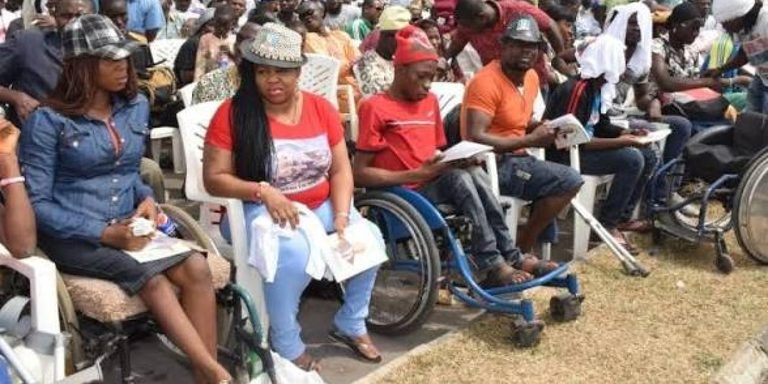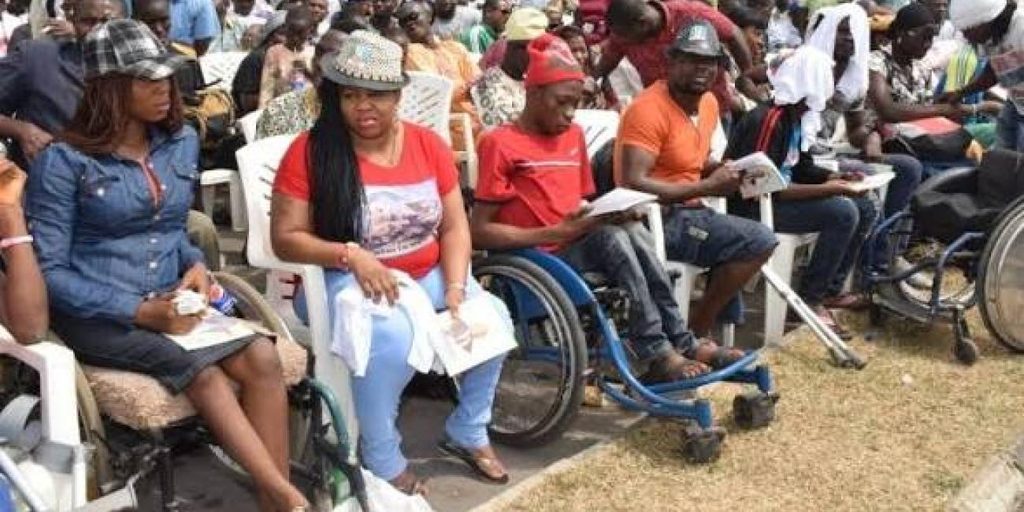
Persons living with disabilities in Nigeria have called on federal and state governments to address discrimination, unemployment, poor healthcare and inadequate educational facilities affecting millions of them.
The group is demanding that governments enforce a five per cent employment quota for persons with disabilities, provide free healthcare services and establish rehabilitation centres across the country.
The demands were contained in an open appeal addressed to the Federal Ministry of Humanitarian Affairs, Disaster Management and Social Development through the National Commission for Persons with Disabilities.
In the appeal titled A Clarion Call From Persons With Disabilities In Nigeria, the group urged authorities to move beyond policy promises and implement existing laws designed to protect their rights.
The appeal was signed by the group’s coordinator, Comrade Ikechukwu Okafor, who said millions of Nigerians with disabilities continued to experience poverty, exclusion and limited access to basic opportunities despite the passage of the Discrimination Against Persons with Disabilities (Prohibition) Act.
Related News:
40-Year-Old British Woman Dies Alongside Unborn Baby After Relocating To Nigeria
Three Nigerians Arrested In Ghana Over Bank Customer Robberies
Nigerian Navy Uncovers 68,175 Litres of Suspected Stolen Crude Oil in Rivers
Okafor acknowledged that some persons with disabilities had achieved success in professions such as journalism, sports, music, law and the arts. However, he said millions of others remained unable to access similar opportunities.
He criticised government institutions for failing to implement the legal provision requiring public organisations to reserve five per cent of employment opportunities for qualified persons with disabilities.
According to him, many qualified applicants are still overlooked or discriminated against during recruitment exercises.
The coordinator also expressed concern about the challenges facing children and young people with disabilities in accessing education.
He explained that although the law provides for free education in government-owned schools from basic to secondary levels, many institutions lack accessible facilities, trained teachers and appropriate learning materials.
On healthcare, Okafor said many members of the group could not afford essential support devices and medical services, including hearing aids, prosthetic limbs, wheelchairs and regular treatment.
He also identified rising transportation costs as another major challenge limiting the movement, economic activities and social participation of persons with disabilities.
The group further called for the renovation of specialised institutions established to provide vocational training, rehabilitation and empowerment programmes.
Okafor specifically mentioned the Farm Craft Centre in Lagos as one of the facilities requiring urgent government attention.
He also urged the Federal Government to include persons with disabilities in its Conditional Cash Transfer programme and the N50,000 grant scheme for vulnerable Nigerians.
Additionally, he demanded their inclusion in the National Health Insurance Scheme and other government-backed healthcare programmes, citing provisions of the National Health Insurance Authority Act 2022 and the Basic Health Care Provision Fund.
The group also called for the establishment of rehabilitation centres across Nigeria’s six geopolitical zones to improve access to skills acquisition, medical support and other essential services.
Okafor said restoring specialised institutions would help persons with disabilities achieve greater independence, develop their abilities and live with dignity.
He urged federal and state governments to take practical steps to enforce existing disability rights laws and guarantee equal opportunities for Nigerians living with disabilities.
About the Author