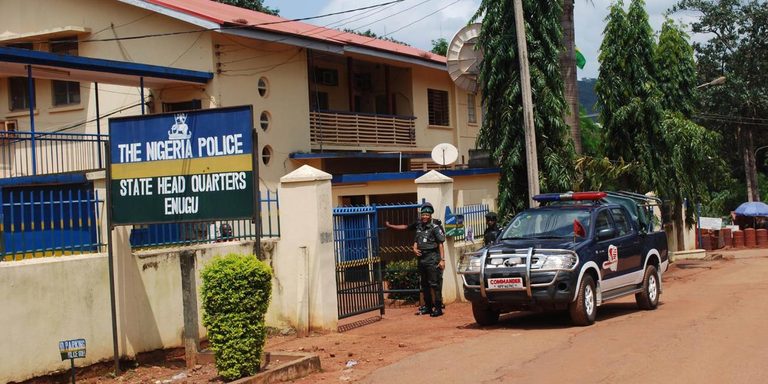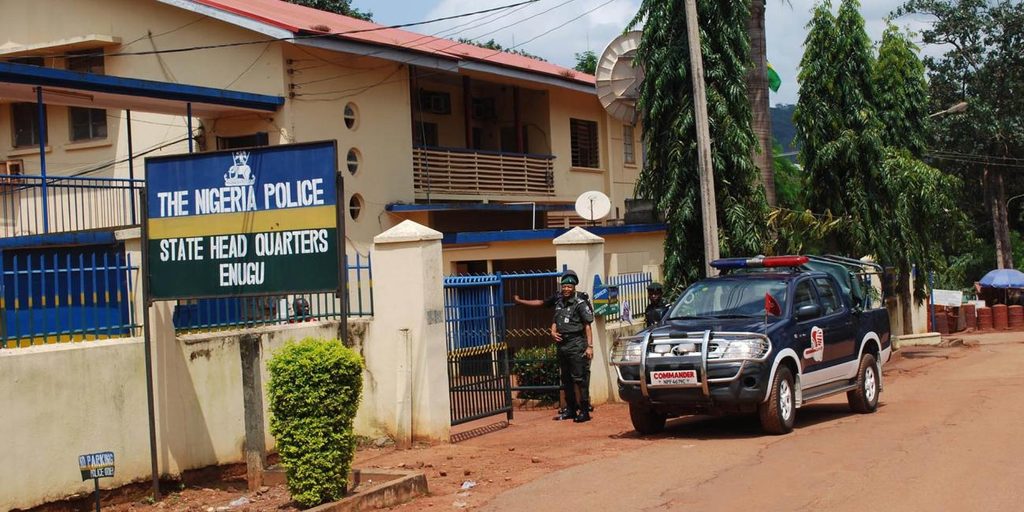
The Enugu State Police Command has come under criticism following allegations that it abandoned junior officers living in police barracks after the Enugu Electricity Distribution Company (EEDC) disconnected their power supply over unpaid bills.
Sources within the command alleged that rather than negotiating with the electricity company to resolve the outstanding debts, senior police officers intervened to ensure that only administrative offices were reconnected.
According to the sources, officers living in the affected barracks were left to make their own arrangements for electricity.
One of the affected personnel said police authorities approached EEDC and requested that power be restored to administrative buildings while residents of the barracks were left without electricity.
Another officer disclosed that electricity company workers had been sent to different police barracks to disconnect residential buildings while reconnecting offices used by Area Commanders and Divisional Police Officers.
Photographs from the affected locations reportedly showed the barracks without electricity, forcing occupants to rely on torchlights at night.
The development followed accumulated unpaid electricity bills. In June 2024, EEDC listed the Nigeria Police Force among its major debtors in the South-East, alongside government institutions, universities and military formations. The total outstanding debts were estimated at over ₦180 billion.
The affected officers reportedly complained that they were being asked to settle estimated electricity bills accumulated before they moved into the barracks.
They explained that police personnel are frequently transferred from one location to another, making it unfair to demand that current occupants pay for bills incurred by previous residents.
Inside Enugu state:
Enugu Indigenes Protest Alleged Abuse Of Power By Traditional Ruler
NDC Governorship Candidate Demands Probe After Police Tear-Gas Worshippers In Enugu
Police Arrest 28-Year-Old Suspect Over ₦200,000 POS Robbery in Enugu
The officers argued that the police authorities should negotiate with EEDC to clear the outstanding debts and ensure that individual apartments are properly metered.
They also described the situation as part of a wider welfare problem affecting junior police personnel across the country.
Among their concerns were poor salaries, inadequate allowances and pension arrangements. They claimed that a police constable earns approximately ₦78,000 monthly, excluding limited allowances.
The officers also expressed dissatisfaction with their continued participation in the Contributory Pension Scheme, unlike some other security and government institutions.
They further raised concerns about poor accommodation, lack of housing allowances and the cost of purchasing uniforms, providing fuel, stationery and repairing patrol vehicles.
According to them, several police barracks across the country have deteriorated, with leaking roofs, overcrowded rooms, damaged sewage systems, blocked drainage channels, water shortages and rodent infestations.
Barracks in Lagos areas such as Ikeja, Ikoyi and Surulere were also mentioned as places where officers face similar accommodation challenges.
Meanwhile, wives of police officers in Enugu have reportedly threatened to protest at the EEDC office within the week to demand government intervention and compensation over the electricity disconnection.
Similar demonstrations have previously been organised by police officers’ wives and retired personnel in Abuja and Lagos over poor welfare conditions and accommodation challenges.
Efforts to reach the Enugu State Police Public Relations Officer, Daniel Ndukwe, for comments were unsuccessful as of the time of filing this report.
About the Author