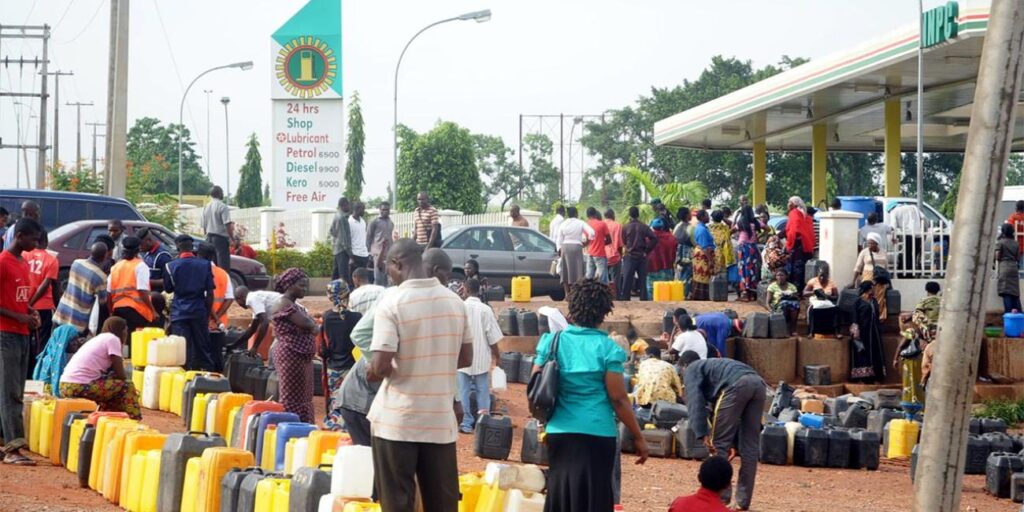
Nigeria may be heading into another round of petrol scarcity within the next 48 hours, as the House of Representatives Committee on Petroleum Resources (Downstream) raises alarm over a worsening supply crisis threatening nationwide distribution.
The warning, issued during a press briefing at the National Assembly in Abuja, highlights growing concerns that unresolved bottlenecks in the fuel supply chain could trigger long queues, sharp increases in pump prices, and further economic strain on citizens already battling high living costs.
Chairman of the committee, Ikenga Ugochinyere, described the situation as urgent and potentially disruptive, noting that the looming shortage is not a result of deliberate government policy but rather deep-rooted inefficiencies within the supply system.
At the centre of the crisis is the inadequate supply of crude oil to the Dangote Refinery, a major facility expected to play a key role in stabilising Nigeria’s fuel market.
Despite being allocated about 21 cargoes of crude oil and requiring at least 15 to function optimally, the refinery is reportedly receiving only five, a shortfall that is already affecting production capacity.
The committee also raised concerns about the quality of crude supplied to domestic refineries, stating that lower-grade crude is being delivered to facilities designed for higher-quality input.
This mismatch, lawmakers say, is reducing efficiency and further straining output levels.
Related News:
Oil producing nation – imports fuel
Fuel Price Surge Hits Workers Hard Nationwide
Rising Tensions, Fuel Scarcity Deepens Across Major Cities
Nigerian Fuel Stations Slash Prices Following 15% Import Duty Lift
Petrol crisis: Dangote’s intervention triggers Nigeria fuel agency heads’ resignation
Dangote Refinery to Nigerians: Report Any MRS Station Selling Fuel Above ₦739
Another critical issue identified is the involvement of international middlemen in crude oil transactions. According to the committee, crude produced in Nigeria is often routed through intermediaries based in global trading hubs, leading to inflated costs.
For every barrel priced at $100, local refiners reportedly pay as much as $118, with the added $18 going to these intermediaries, a development described as both exploitative and unsustainable.
Lawmakers warned that these additional costs are eventually passed on to consumers, contributing to rising fuel prices and increasing the likelihood of supply disruptions across the country.
The committee is now calling for strict enforcement of the Domestic Crude Oil Supply Obligation under the Petroleum Industry Act, alongside an urgent review of crude quality standards to support local refining.
They also urged Bola Tinubu to issue a decisive executive directive to ensure compliance among stakeholders and safeguard Nigeria’s domestic energy supply chain.
While appealing to Nigerians to remain calm and avoid panic buying, the lawmakers cautioned that failure to address the situation within the critical 48-hour window could lead to widespread fuel shortages, increased transportation costs, and a deeper cost-of-living crisis.
The warning comes against the backdrop of rising global oil prices linked to ongoing geopolitical tensions, particularly involving Iran, United States, and Israel, which continue to impact the global energy market.
About The Author