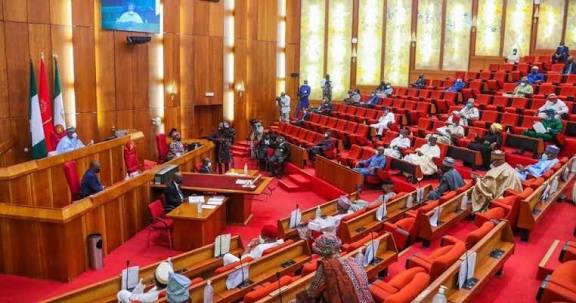
Minority lawmakers in Nigeria’s House of Representatives of Nigeria on Tuesday staged a walkout from plenary in protest over the passage of key provisions in the Electoral Act Amendment Bill 2025, accusing the majority caucus of undermining efforts to strengthen electoral transparency.
The protest followed the adoption of Clause 60(3) of the bill, which permits both real-time electronic transmission of election results and manual collation as a backup option.
Minority lawmakers argued that retaining manual transmission creates loopholes that could be exploited to manipulate election outcomes.
During clause-by-clause consideration, Rep. Bamidele Salam moved a motion seeking the deletion of the provision allowing manual transmission of results, insisting that results should be transmitted electronically without exceptions.
The motion was seconded by Minority Leader, Rep. Kingsley Chinda.
However, when the motion was put to a voice vote, the majority voted against the amendment, thereby retaining the provision for both manual and electronic transmission.
The decision sparked visible discontent among minority lawmakers, who subsequently walked out of the chamber to formally register their objection.
Related News:
Electoral Act: Senate Adopts Electronic Transmission With Manual Backup
2027: Elections, Battle for Electronic Transmission in Nigeri
2027: Combining Manual and Electronic Voting Threatens Election Integrity
Peter Obi Declares Intention to Contest 2027 Presidential Election
Addressing journalists after the walkout, Chinda said the minority caucus could not support any clause that opens the door to manipulation of election results.
He stressed that electronic transmission of results remains the most credible way to safeguard the integrity of elections in the country.
The minority caucus also opposed Clause 84 of the amendment bill, which deals with the modes of candidate nomination by political parties.
According to Chinda, the minority maintains that political parties should be allowed to determine whether to adopt direct primaries, indirect primaries or consensus arrangements without legislative interference.
Despite the protest, the House proceeded with the consideration and passage of the contentious clauses, setting the stage for heightened political debate ahead of Nigeria’s 2027 general elections.
The development highlights deepening partisan divisions within the Green Chamber over the direction of electoral reforms, with the minority vowing to continue mobilising public opinion against provisions they believe could weaken transparency and internal party democracy.
About the Author