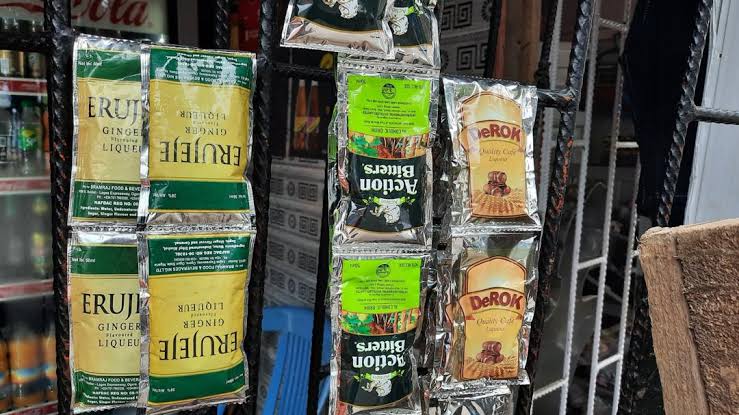
The Federal Government has suspended the enforcement of the nationwide ban on sachet and small-volume alcoholic drinks, effectively putting on hold a controversial policy that had sparked widespread debate among manufacturers, traders, and consumers.
The decision follows sustained pressure from industry stakeholders, labour unions, and small business owners who warned that an immediate enforcement of the ban would lead to massive job losses, disrupt investments worth billions of naira, and worsen the already fragile economic situation.
The ban, initially introduced by the National Agency for Food and Drug Administration and Control (NAFDAC), targeted alcoholic beverages packaged in sachets and small PET bottles below 200ml.
Authorities said the measure was designed to curb rising alcohol abuse, particularly among youths and underage consumers.
Health officials had expressed concern that the low cost and easy accessibility of sachet alcohol made it attractive to minors and vulnerable groups, contributing to addiction, health complications, and social vices.
Related News:
NAFDAC workers begin nationwide strike
Visa Ban, Deportation Fears Drive Nigerians to Self-Deportation
Rising Banditry Puts Nigeria’s Food Supply at Risk
FG Bans Meter Charges, Warns DisCos Against Extorting Consumers
Panic as Tax Authorities Plan Direct Debit of Nigerians’ Bank Accounts
Banks to Deduct 7.5% VAT on POS, Mobile Transfer Fees
NAFDAC also cited public health data linking excessive alcohol consumption to increased cases of liver disease, accidents, domestic violence, and other social challenges. The agency argued that restricting small, affordable alcohol packs would help reduce impulsive purchases and limit access among underage drinkers.
However, manufacturers and distributors pushed back, arguing that the policy lacked adequate transition time and would cripple small-scale retailers who rely heavily on sachet alcohol sales for daily income.
Industry representatives also claimed they had previously secured an understanding with regulators for a phased withdrawal rather than an abrupt enforcement.
In response to the mounting backlash and economic concerns, the Federal Government announced that enforcement actions would be paused to allow for further consultations and a more structured transition framework.
While the suspension offers temporary relief to producers and traders, public health advocates insist that the core concerns about youth alcohol abuse remain unresolved.
Observers say the coming months will determine whether the government reintroduces the ban in phases or adopts alternative strategies to address alcohol-related harm across the country.
About The Author