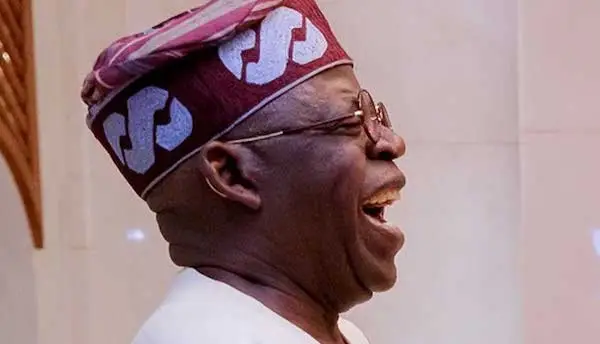
As the 2027 general election approaches, President Bola Ahmed Tinubu appears increasingly confident about his re-election prospects, with divisions within the opposition providing a potential advantage for the ruling All Progressives Congress (APC).
Despite mounting political challenges and public scrutiny of his administration, Tinubu has shown little indication of being intimidated by the prospect of a fierce presidential contest. The recent inauguration of his campaign council further signals that the president and his political camp are preparing for another electoral battle.
However, the opposition’s inability to build a united front could prove to be one of Tinubu’s biggest political advantages ahead of the election.
A political analyst with Asenexpress.com observed that, unlike previous presidential elections in which a dominant opposition party or a clear challenger emerged, the political landscape ahead of 2027 remains fragmented. According to the analyst, the absence of a broadly consolidated opposition has seemingly placed Tinubu in a comfortable position as the election draws closer.
For the president, the challenge may not necessarily be the absence of public dissatisfaction with his administration, but whether opposition parties can convert that discontent into a credible, coordinated electoral movement.
Related News:
Police Stop ‘Tinubu Must Go’ Campaign Meeting in Kano
2027 Election Campaign: The Season of Media Urchins
Tinubu’s apparent calmness could therefore be interpreted as a reflection of the political circumstances surrounding his potential re-election bid. With the opposition yet to demonstrate a unified strategy capable of mounting a sustained national challenge, the president may have little reason to display the kind of anxiety associated with a closely contested election.
The political atmosphere also raises questions about whether the opposition can move beyond public declarations of confidence and develop the structures, alliances and grassroots mobilisation required to defeat an incumbent president.
The African Democratic Congress (ADC), which has emerged as part of the opposition conversation ahead of 2027, faces the task of convincing Nigerians that it can provide a credible alternative to the APC. Statements by the party Vice Presidential candidate Rotim Amechi on chances of winning the presidency may energise supporters, but confidence alone doesn’t guarantee electoral success.
The opposition must still contend with questions of leadership, internal cohesion, candidate acceptability, nationwide political structures and the ability to translate public dissatisfaction into votes.
Tinubu’s political advantage, therefore, may lie less in the absence of criticism against his administration than in the opposition’s apparent difficulty in presenting a united and compelling alternative.
Nigeria’s political history, however, offers no guarantee that an incumbent president will retain power simply because the opposition is divided. The 2015 presidential election, in which former President Goodluck Jonathan lost to Muhammadu Buhari, demonstrated that an incumbent could be defeated when opposition forces successfully united around a common candidate and electoral strategy.
That precedent provides an important lesson for both camps ahead of 2027: incumbency can offer significant advantages, but it does not automatically translate into victory at the polls.
For Tinubu, the immediate political calculation may be straightforward. If opposition parties remain divided, struggle to agree on a common candidate or fail to establish a coordinated national campaign, the APC could benefit from the resulting fragmentation.
For the opposition, the challenge is equally clear. It must demonstrate that its ambition to unseat the president extends beyond political rhetoric and is backed by the unity, organisation and electoral strategy necessary to compete effectively.
Whether Tinubu’s apparent calmness ultimately proves justified will depend on how the political contest unfolds in the months ahead. For now, the opposition’s struggle to unite may be giving the president reason to remain confident, but the final verdict will belong to Nigerian voters in 2027.
About the Author