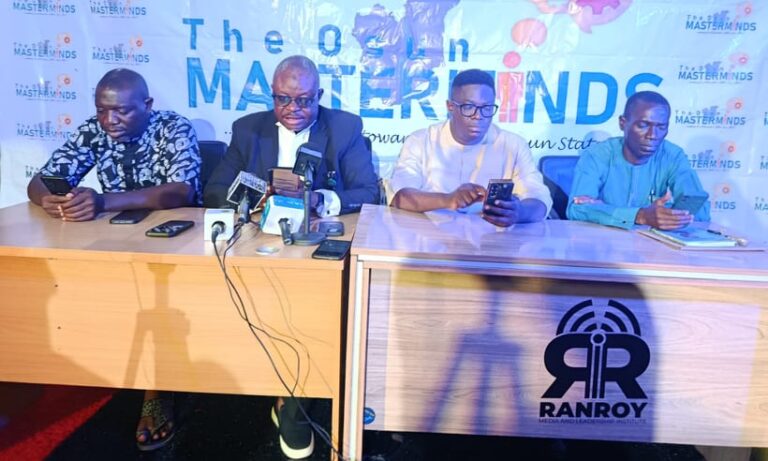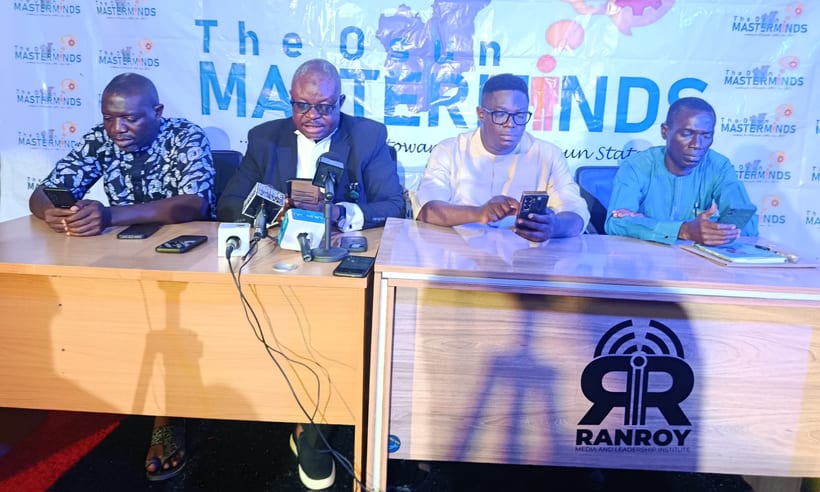
A civil society organisation in Osun State, The Osun Masterminds (TOM), has condemned reported attacks on opposition members in Edo State while expressing concern over the worsening electricity crisis across Nigeria.
The organisation called on relevant authorities to take urgent action to address political violence ahead of the 2027 general elections and improve electricity supply across the country.
Its Executive Director, Professor Wasiu Oyedokun-Alli, made the position known during the organisation’s November 2026 State of the State address delivered on Friday.
Oyedokun-Alli expressed concern over recurring cases of political intolerance and violent attacks against opposition members as political activities increase ahead of the 2027 elections.
He specifically referred to reports of attacks on opposition members and supporters in Benin City, Edo State, on November 25, 2026, following political engagements in the state.
Inside Osun state:
Suspected Cult Clashes Claim Two Lives in Osun Community
Mob Kills Accident Survivor After Osun Crash Claims Two Lives
Police Arrest Man For Allegedly Slapping Officer During Traffic Control In Osun
According to him, the incidents came weeks after similar attacks were reported against opposition figures in other parts of the country.
The organisation condemned political thuggery, intimidation and violence against opposition members, regardless of their political affiliations.
It warned that democracy would be threatened if political authorities, party supporters or security operatives treated opposition mobilisation as a criminal activity.
The group urged the Independent National Electoral Commission (INEC), Nigeria Police Force, Department of State Services and state governors to ensure adequate protection for all political parties.
However, it advised opposition parties and other political actors to avoid inflammatory statements and unnecessary provocation, stressing that political criticism, issue-based campaigns and peaceful mobilisation were legitimate democratic activities.
On electricity, the organisation expressed concern over the country’s worsening power situation, recalling that electricity generation reportedly dropped to 781 megawatts on November 20, 2026, following the failure of several transmission lines.
It said the development plunged homes, hospitals, businesses and industries into darkness.
Oyedokun-Alli described the situation as unacceptable, noting that Nigerians continued to pay higher electricity tariffs despite poor power supply.
He also lamented that businesses were struggling with the additional cost of purchasing diesel and petrol to maintain operations.
The organisation faulted repeated explanations involving gas shortages, transmission line failures and maintenance challenges, calling for practical solutions to the persistent electricity crisis.
It urged the Federal Ministry of Power, Nigerian Electricity Regulatory Commission, Transmission Company of Nigeria, electricity generation and distribution companies, as well as state governments, to take coordinated steps towards improving supply.
The group also encouraged state governments to explore decentralised electricity solutions using constitutional reforms that allow states to participate in electricity generation and distribution.
It reaffirmed its commitment to the welfare of Osun residents and the protection of Nigeria’s democracy, urging citizens to demand accountability, reject political violence and insist on reliable electricity supply.
About the Author