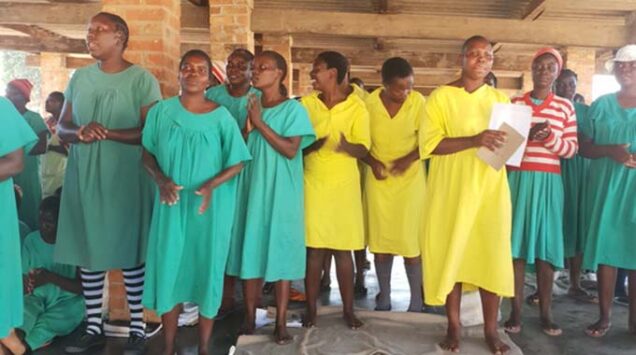
Nigeria currently has 82 women on death row in various correctional centres across the country, one of the highest figures in sub-Saharan Africa.
Angela Uzoma-Iwuchukwu, Country Director of ASF France in Nigeria, revealed this on Wednesday during a capacity-building session on gender and the use of the death penalty in Abuja.
We are convinced that these women, often neglected and forgotten simply because they are behind bars and on death row, deserve to have their voices heard and their unique circumstances highlighted,” she said.
She added, “There are significant gender issues in how the death penalty is applied. While it is often presented as neutral, the reality is different. The criminal justice system is riddled with gender biases—from the moment of arrest to conviction and even during incarceration for women facing capital punishment.”
ese women are victims of domestic violence, and when their reactions lead to homicide, the justice system often fails to recognize their victimhood.
“In practice, these women face further violence and discrimination within the legal system. In effect, they are punished not just for their crimes, but for being women who dared to commit them,” she said.
She noted that poverty plays a significant role, explaining that many cannot afford a lawyer. “The quality of legal representation often decides whether someone ends up on death row or not .
Uzoma-Iwuchukwu highlighted the case of a young woman in Katsina State who had been sentenced to death by stoning for becoming pregnant outside of marriage. Thanks to the intervention of ASF France, the Court of Appeal eventually overturned her sentence.
“The only evidence presented against her was that she became pregnant out of wedlock, yet no one ever asked who had impregnated her,” she said.
Every inmate has a mother, wife, daughter, or sister who suffers when the justice system fails, said Dr. Chioma Kanu, Executive Director of the Mothers and Marginalised Advocacy Centre.
“Do not be deceived— not every death row inmate is truly guilty. Some are convicted based on confessions extracted under police torture, while others cannot afford proper legal representation. Remember, we can free an innocent prisoner, but we cannot bring back the dead.”
She added that their goal is to ensure justice for victims and security for families.
About the Author