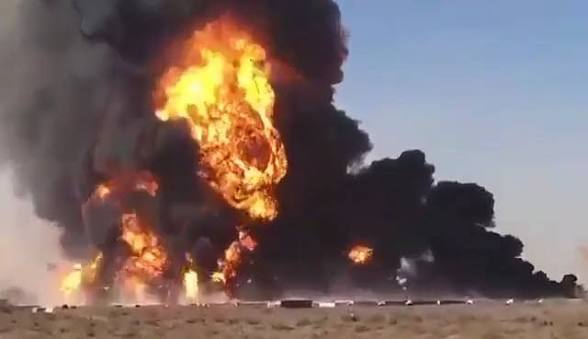
Tensions in the Middle East surged on Monday after Iran attacked a fully loaded Kuwait‑flagged crude oil tanker near the Dubai coast, escalating fears of a wider regional conflict.
The tanker, Al‑Salmi, was carrying approximately 2 million barrels of crude oil, valued at over $200 million, when it came under assault.
Authorities report that Iranian drones fired explosive payloads at the vessel, striking the hull and igniting a fire. The blaze caused significant structural damage but was later contained by Dubai’s emergency response teams, and no casualties were reported.
This attack is the latest in a series of strikes targeting commercial shipping since hostilities erupted between Iran, the United States, and Israel on February 28.
Analysts warn that continued disruptions in the Strait of Hormuz, a key transit route for roughly 20% of global oil and LNG supplies, could have severe economic consequences worldwide.
Related News:
Rising Iran Crisis Forces US Embassy Shutdown in Kuwait
Trump Declares He Must Decide Iran’s Next Leader
Iran Faces Criticism for Allowing Children Join War Support Programme
Rising Iran Crisis Forces US Embassy Shutdown in Kuwait
Iran Women Footballers Seek Refuge in Australia After Anthem Defiance
Iran to Face Nigeria in World Cup Warm-Up, Insists on Avoiding U.S. Venues
Barcelona Women Crush Real Madrid 6-2 in Champions League Quarter-Final
Following the incident, oil prices spiked briefly, intensifying concerns over global energy security. In the United States, fuel prices have climbed above $4 per gallon, creating political pressure for President Donald Trump and his administration ahead of the November midterm elections.
The regional military situation remains volatile. Iran-backed Houthi forces have launched drones and missiles toward Israel, while Turkey reported intercepting a ballistic missile that entered its airspace.
Israeli forces also struck targets in Tehran and Beirut, reportedly targeting Iranian and Hezbollah-linked infrastructure.
Explosions in Tehran caused power outages in several districts, and in southern Lebanon, four Israeli soldiers were killed, with additional casualties among United Nations peacekeepers.
Iran’s military defended the tanker strike and other operations as defensive measures, describing them as retaliatory actions against ongoing U.S. and Israeli aggression.
Meanwhile, thousands of troops from the U.S. 82nd Airborne Division have been deployed to the region, signaling the potential for expanded military operations.
Diplomatic efforts continue behind the scenes. The White House set a new deadline of April 6 for Iran to reopen the Strait of Hormuz.
Iranian officials dismissed U.S. proposals as unrealistic. President Trump warned that the U.S. could “completely obliterate” Iran’s oil wells, power plants, and strategic facilities, including Kharg Island, if the strait remains closed.
Markets remain volatile amid uncertainty, as investors and governments monitor the situation for its potential impact on global energy supplies and economic stability.
About The Author