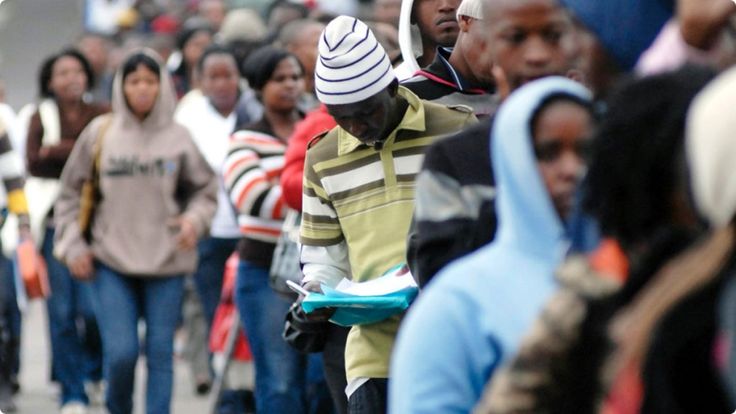
To Millions of Nigerian youths, graduating from university no longer guarantees a ticket to financial independence, it often marks the beginning of a long, uncertain wait for employment.
Unemployment refers to the condition in which individuals who are willing and able to work are unable to find jobs. It is a critical economic indicator, reflecting a country’s capacity to provide opportunities for its workforce.
High unemployment, particularly among young graduates, not only limits income and living standards but also slows economic growth and national development.
Official statistics show that Nigeria’s unemployment rate is projected to hover between 4 and 5 per cent in 2026, following a decline to 4.3 per cent in the second quarter of 2024 and 4.9 per cent by the end of 2024. On paper, these figures appear positive, but the reality for young graduates tells a different story.
The Nigerian Economic Summit Group (NESG) estimates that Nigeria must create 27.3 million jobs between 2025 and 2030 to maintain the unemployment rate at 4.3 per cent.
Wilson Erumebor, Senior Economist at NESG, notes that achieving this requires addressing low productivity and weak private sector growth through consistent and coordinated economic reforms.
Related News:
2027: Push for Political Unity Intensifies Ahead of Nigeria’s Elections
Nigerian Man Sentenced to Six-and-a-Half Years in US Prison Over $5m
2027: Key Political Realignments Shaping Nigeria’s Next General Election
Soaring Crime Rates Trigger Security AlarmsSoaring Crime Rates Trigger Security Alarms
Despite these projections, youth unemployment remains high, standing at 6.5 per cent as of mid-2024. Every year, thousands of graduates enter the labour market, yet job opportunities remain scarce.
This glaring gap highlights the government’s failure to create sufficient employment opportunities. Many graduates spend years searching for jobs, accept positions below their qualifications, or migrate abroad.
To tackle this challenge, the government must prioritise private sector growth by improving infrastructure, stabilising electricity, and ensuring consistent economic policies.
Investment in skills development, vocational training, entrepreneurship, and sectors such as agriculture, manufacturing, and technology can also expand meaningful employment opportunities.
Ultimately, Nigeria’s unemployment problem is not merely a statistic; it is a test of the government’s commitment to its youth. Without deliberate and sustained action, millions of graduates will continue to struggle, slowing both economic progress and national development.
About the Author