
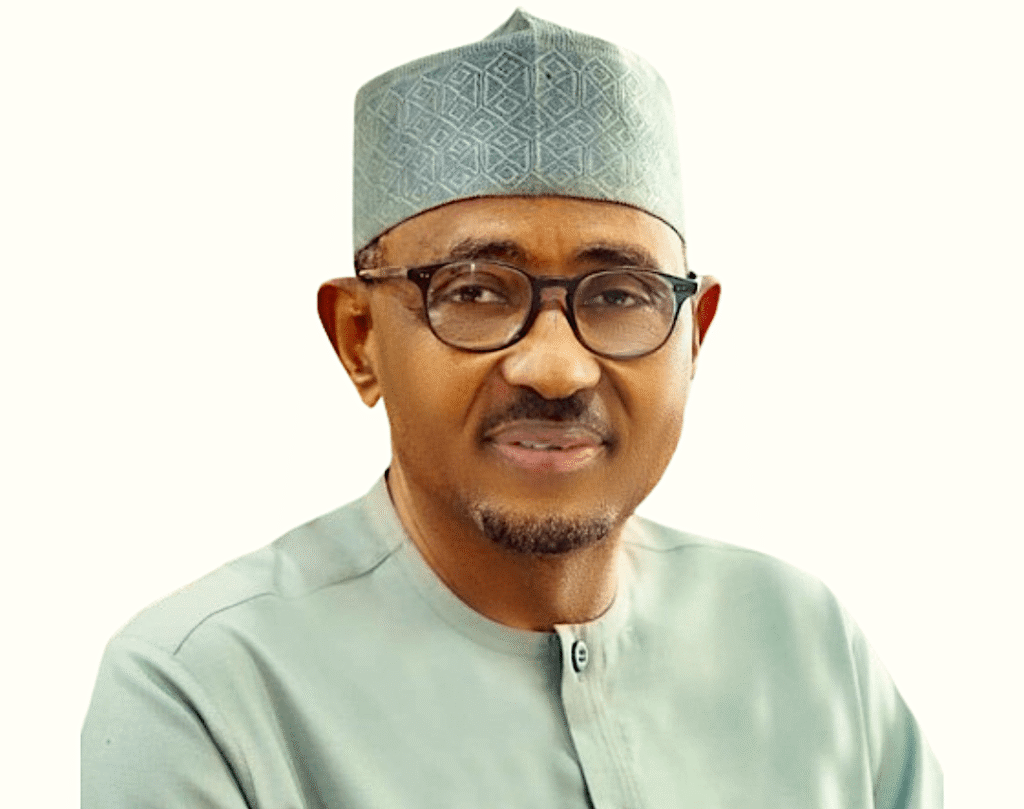
Nigeria’s petroleum sector faced renewed uncertainty after Farouk Ahmed, CEO of the Nigerian Midstream and Downstream Petroleum Regulatory Authority (NMDPRA), and Gbenga Komolafe, head of the Nigerian Upstream Petroleum Regulatory Commission (NUPRC), resigned.
The resignations followed allegations by Dangote Group President Aliko Dangote, who accused Ahmed of economic sabotage and questioned the source of his wealth, including $5 million spent on his children’s education in Switzerland.
Dangote also petitioned the Independent Corrupt Practices Commission for a formal investigation into Ahmed.
Following a petition and the controversy it sparked, Farouk Ahmed was summoned to the Presidential Villa and subsequently resigned.
Although not directly involved, Gbenga Komolafe also stepped down, as the Presidency opted for a simultaneous leadership change at both regulatory agencies.
The Special Adviser to the President on Information and Strategy, Bayi Onanuga, confirmed the resignations and announced that President Tinubu has requested Senate approval for their replacements.
Both Ahmed and Komolafe were originally appointed in 2021 by former President Buhari to lead the agencies established under the Petroleum Industry Act.
President Tinubu has requested the Senate to confirm Oritsemeyiwa Amanorisewo Eyesan as CEO of NUPRC and Engr. Saidu Aliyu Mohammed as CEO of NMDPRA.
Both nominees are experienced oil and gas professionals: Eyesan spent 33 years at NNPC, retiring as Executive VP, Upstream, while Mohammed has held leadership roles at Kaduna Refining, Nigerian Gas Company, and several NNPC subsidiaries.
Their appointments come amid anxiety in the downstream oil sector, as marketers warn that recent price cuts by Dangote Refinery could worsen business instability.
The NMDPRA boss, Farouk Ahmed, was reportedly called to the Presidential Villa and asked to resign, sparking tension in Nigeria’s downstream oil sector.
While the resignation followed allegations related to payments for his children, some industry insiders argue the accusations were minor and not illegal.
The controversy comes amid aggressive price cuts by Dangote, who reduced petrol to N699 per litre, causing massive losses for other marketers and intensifying fears of business collapse in the sector.
The resignations and market disruptions have left dealers uneasy about competition and regulatory stability.
The conflict between Dangote and the outgoing NMDPRA boss, Farouk Ahmed, began in 2024 after the Dangote refinery started producing fuel.
Dangote’s deputy accused NMDPRA of indiscriminately issuing import licences for “dirty” fuel, forcing the refinery to export diesel and aviation fuel abroad.
Ahmed, in turn, criticized Dangote fuel as inferior with high sulphur content and opposed suspending imports in favor of relying solely on the refinery, citing national energy security concerns.
He also claimed that, while imported diesel complied with the West African sulphur limit of 50 parts per million, products from Dangote and certain modular refineries contained between 650 and 1,200 ppm, a statement that sparked widespread demands for his removal.
In late 2025, the NMDPRA justified increased fuel import licences, citing low domestic supply in September and October. November imports reached 1.5 billion litres, the highest since the Dangote refinery began production, despite Lekki refinery supplying 19.5 million litres per day.
Aliko Dangote criticized NMDPRA boss Farouk Ahmed for issuing “reckless” import licences while his refinery tanks were full, warning that licences for 7.5 billion litres were planned for early 2026.
He also accused Ahmed of misusing public funds for his children’s education abroad. Ahmed did not publicly respond and left office before an ICPC probe could begin.
Meanwhile, NUPRC head Gbenga Komolafe resigned due to ongoing friction with Dangote over access to domestic crude, despite government interventions like the naira-for-crude deal. Dangote’s refinery later boosted local fuel supply, reduced queues, and cut petrol prices significantly.
Despite a previous deal, Dangote continued importing crude from the US, Ghana, and other African countries, with the US alone supplying 100 million barrels annually. Following the resignations of the heads of NMDPRA and NUPRC, Billy Gillis-Harry, President of PETROAN, expressed readiness to support the new executives and hoped for improved service delivery.
Industry experts, including Jeremiah Olatide of Petroleumprice.ng, viewed the resignations as confirmation of long-standing issues of corruption, weak regulation, and institutional decay in Nigeria’s petroleum sector.
Energy lawyer Rasheed Osagie said the outcome was unsurprising, noting that with Dangote being the largest investor and taxpayer in the country, complaints from such a key player inevitably carry weight.
Professor of Petroleum Economics Wumi Iledare described the resignations as a “moment of truth” for regulators under the Petroleum Industry Act, cautioning that the stability and independence of regulatory institutions were now under scrutiny.
Civil society leaders Auwal Rafsanjani and Debo Adeniran urged comprehensive investigations, emphasizing that mere resignation was insufficient.
As the new leadership prepares to assume control, the petroleum sector remains on edge, with operators closely watching to see whether the shakeup will restore confidence or further deepen concerns in an industry already unsettled by a fierce petrol price war.
About the Author



1 thought on “Petrol crisis: Dangote’s intervention triggers Nigeria fuel agency heads’ resignation”