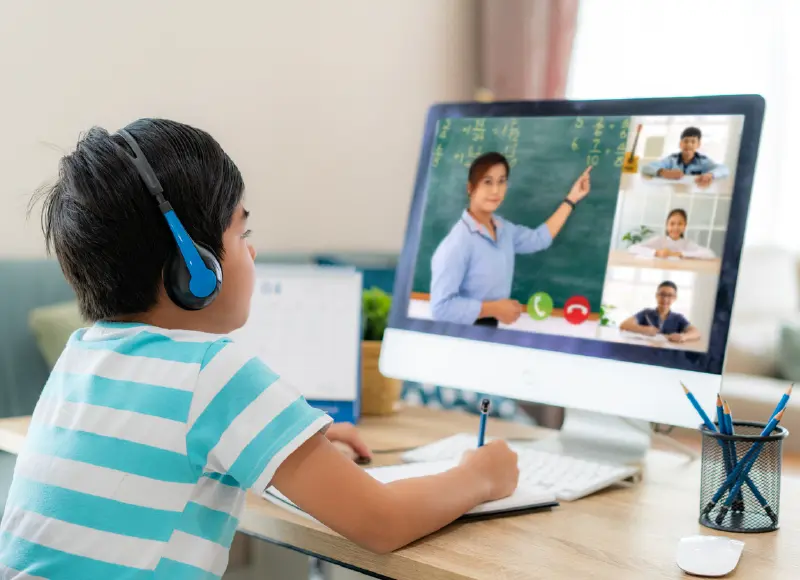
Online classes have emerged as a major force reshaping education, changing how knowledge is delivered and received across schools and higher institutions.
With lessons now conducted through digital platforms, learning has moved beyond the traditional classroom, offering flexibility while also exposing new and complex challenges within the education sector.
Online classes refer to a system of teaching and learning carried out through the internet using digital tools such as video conferencing applications, online learning platforms, recorded lectures and electronic assessments.
Through this method, students participate in lessons remotely, interact with teachers virtually and submit assignments online, making education accessible from almost any location.
Related News:
Never let online negativity control you, influencer Demure advises
Lagos Launches Online Recruitment for Neighbourhood Safety Officers
Police Nab Man Over $7,000 Online Romance Scam
Rising Wave of Cyberbullying Puts Young People at Risk Online
The rapid rise of online classes has been driven by technological advancement and increased access to digital devices.
The outbreak of the COVID-19 pandemic played a critical role in accelerating the shift, as schools were forced to close physical classrooms to prevent the spread of the virus.
In addition, growing student populations, limited classroom space, the demand for flexible learning schedules and the need to reach learners in remote areas have contributed to the widespread adoption of online education.
The impact of online classes on the education system has been significant. Many institutions have expanded their reach, allowing students to access learning opportunities regardless of geographical boundaries.
Students now have the ability to learn at their own pace and revisit recorded lessons when necessary.
However, the transition has also revealed deep inequalities, particularly in regions where access to stable internet connections, electricity and digital devices remains a major challenge.
The effects of online learning are strongly felt by both students and teachers. While some students benefit from reduced transportation costs and flexible study hours, others struggle with distractions at home, limited social interaction and reduced motivation.
Teachers have also faced difficulties adapting to digital teaching methods, often with little training, while managing large virtual classrooms and ensuring effective student engagement.
Online classes have attracted criticism from education stakeholders who argue that virtual learning weakens teacher–student interaction and reduces classroom discipline.
Concerns have also been raised about academic dishonesty, as online assessments can be difficult to monitor. Practical and skill-based courses suffer in online settings due to the lack of hands-on experience.
Additionally, prolonged screen time has been linked to fatigue, eye strain and mental stress among learners.
Experts have called for deliberate efforts to address these challenges through improved digital infrastructure and affordable internet access.
Training programmes for teachers, digital literacy for students and the provision of learning devices have also been identified as key solutions.
Many educators advocate for a blended learning approach that combines online instruction with physical classroom teaching to balance flexibility with effective face-to-face interaction.
As online classes continue to redefine learning, education stakeholders agree that the focus must shift toward improving quality, accessibility and sustainability. With the right policies and investments.
About the Author