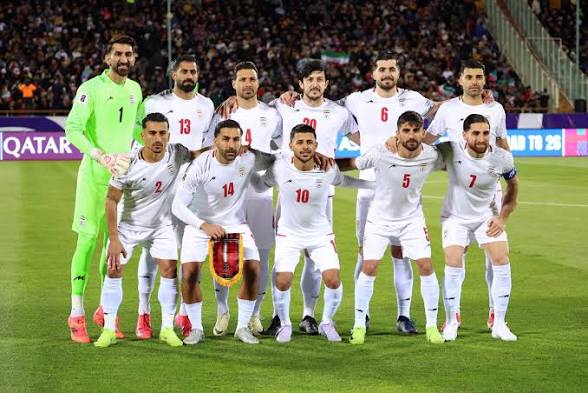
Iran’s football authorities have opened discussions with FIFA to relocate their 2026 World Cup group-stage matches from the United States to Mexico, citing growing security concerns linked to the ongoing Middle East conflict.
The development was confirmed on Monday through a statement shared by Iran’s embassy in Mexico, indicating that talks are underway to ensure the safety of the Iranian national team during the tournament.
Iran is one of the qualified teams for the 2026 FIFA World Cup, which will be jointly hosted by the United States, Canada, and Mexico. However, recent geopolitical tensions have cast doubt over the team’s participation in matches scheduled to be played on U.S. soil.
According to Iran’s football federation president, Mehdi Taj, the team may refuse to travel to the United States following remarks by U.S. President Donald Trump suggesting he could not guarantee the team’s safety.
“If the U.S. cannot ensure the security of our players, we will not travel there,” Taj stated. “We are currently negotiating with FIFA to have our matches held in Mexico instead.”
Related News:
Iran Women Footballers Seek Refuge in Australia After Anthem Defiance
Iran Withdraws from 2026 FIFA World Cup After Death of Supreme Leader
Bellamy Feels ‘Responsibility’ to Take Wales Back to World Cup
Iran is scheduled to face New Zealand and Belgium in Los Angeles, before taking on Egypt in Seattle. Their training base had also been planned for Tucson, Arizona.
Iran’s ambassador to Mexico, Abolfazl Pasandideh, criticized the U.S. government for what he described as a lack of cooperation regarding visa processing and logistical arrangements for the Iranian delegation.
He confirmed that a formal request has been made to FIFA to shift Iran’s matches to Mexico.
FIFA has yet to issue an official response regarding the request.
Meanwhile, Trump’s earlier comments warning that Iran’s team should avoid traveling to the United States “for their own safety” have sparked backlash.
Iranian authorities insist that no country has the right to bar their national team from participating in the World Cup.
The situation follows escalating military tensions involving Iran, the United States, and Israel, raising broader concerns about security and logistics ahead of the global football tournament.
About the Author