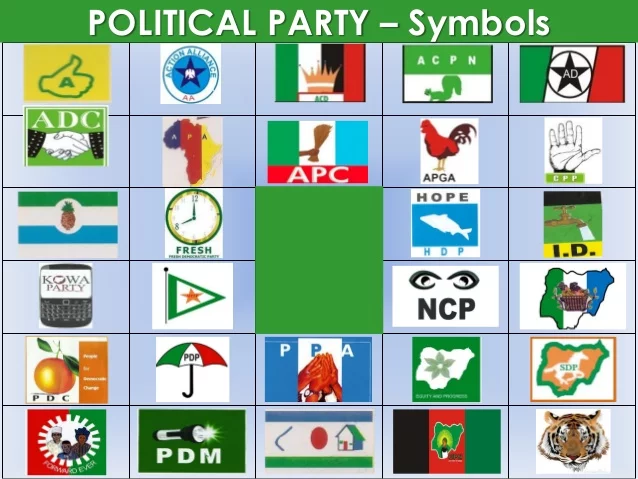
Internal crises within Nigeria’s political parties continue to weaken democratic institutions, as leadership battles overshadow governance and policy direction.
Disputes over national and state party leadership have created deep divisions, producing rival factions, parallel executives and prolonged court cases that leave parties unstable.
These conflicts are largely driven by personal ambition and the struggle for control of party structures, delegates and political influence.
Rather than focusing on ideology or public service, many party leaders prioritise power, leaving parties disconnected from the concerns of ordinary Nigerians.
The consequences are evident during elections. Leadership tussles often result in chaotic primaries, candidate imposition and defections, weakening party unity and confusing voters.
Related News:
Wike Fighting for Political Survival – APC Leader Speaks
Switching Parties: A Critical Choice for Politically Ambitious Candidates
Stop the Political Distractions, Lagos APC Warns Obi, ADC
Court judgments delivered close to election dates have, in several cases, altered candidate lists and disrupted electoral processes.
Governance also suffers, as internal divisions affect coordination among elected officials. Lawmakers and appointees frequently align with factions instead of pursuing collective goals, slowing legislation and policy implementation.
Analysts say these crises can be reduced through stronger internal democracy, transparent primaries and strict adherence to party constitutions.
Dialogue and internal dispute-resolution mechanisms should replace excessive litigation. In addition, INEC must enforce compliance with party rules.
Without these reforms, leadership battles will continue to erode public trust and weaken Nigerian politics.
About The Author